
Why Gujarat's Recent Flooding Reminds Us That Underground Infrastructure Matters More Than We Think
When heavy rain falls, most people look at what they can see.
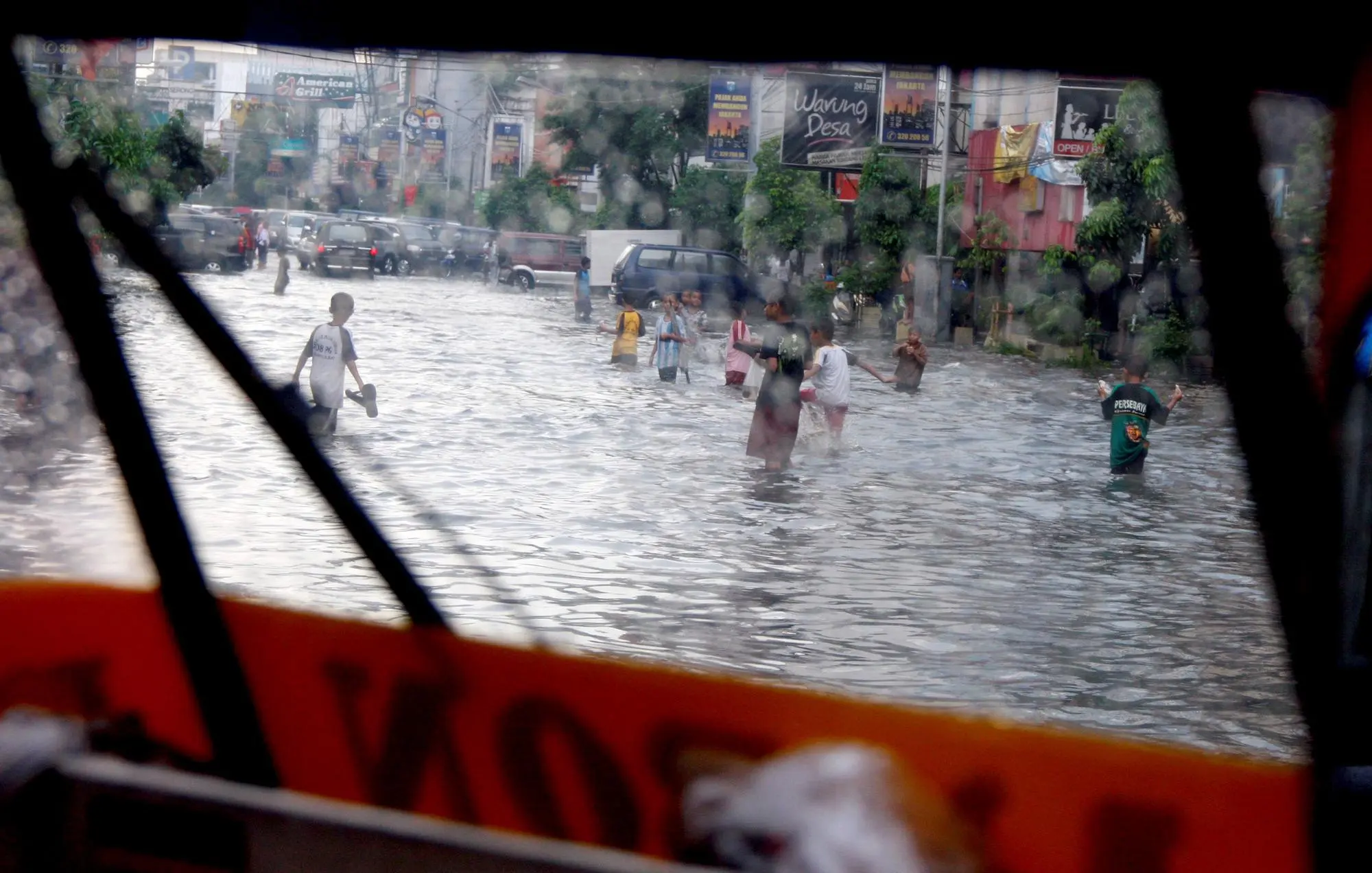
Flooded roads.
Submerged vehicles.
Traffic jams stretching for kilometres.
Water entering homes and commercial buildings.
Schools closing.
Emergency rescue teams being deployed.
But infrastructure engineers often look somewhere else entirely.
They look underground.
Because while flooding becomes visible on the surface, the real story usually begins beneath it.
The recent monsoon across Gujarat reminded everyone how quickly an entire city can come to a standstill. Ahmedabad witnessed one of its highest single-day rainfall events in decades, while districts across South Gujarat, North Gujarat and Saurashtra experienced severe flooding, road closures and large-scale rescue operations. More than 40,000 people were evacuated across the state, hundreds of roads were affected, and Army, NDRF and SDRF teams were deployed to support relief efforts.
For many residents, it felt like an unavoidable natural disaster.
Yet for engineers, planners and infrastructure professionals, these events raise a much larger question.
How well prepared are our cities to manage increasingly intense rainfall?
The answer often lies in something most of us never notice until it stops working.
Underground infrastructure.
Gujarat's Monsoon Was a Reminder, Not an Exception
Heavy rainfall has always been part of Gujarat's climate.
However, the scale and intensity of recent downpours have highlighted how vulnerable urban infrastructure can become when enormous volumes of water need to be managed within a short period.
Ahmedabad received nearly 295 mm of rainfall within 24 hours, making it one of the city's most significant rainfall events since 2000. Roads disappeared beneath floodwater, underpasses were closed, public transport was disrupted, and educational institutions temporarily suspended operations.
Across the state, districts including Ahmedabad, Surat, Navsari and Valsad experienced severe waterlogging and flash flood-like conditions, prompting emergency response measures and large-scale evacuations.
In Ahmedabad alone, civic authorities later confirmed that water had accumulated across more than one hundred residential societies before dewatering operations gradually restored normalcy.
For residents, these events created understandable frustration.
For the construction and infrastructure industry, they also created an opportunity to reflect.
Because rainfall itself is only one part of the equation.
Flooding Doesn't Usually Start With the Rain
That statement may sound strange.
After all, without rain there wouldn't be flooding.
But modern cities are very different from natural landscapes.
Years ago, rainwater would naturally soak into open land, fields and vegetation.
Today, much of that land has been replaced by roads.
Concrete.
Parking areas.
Industrial estates.
Commercial developments.
Housing societies.
Footpaths.
Warehouses.
Airports.
As cities expand, the amount of land capable of naturally absorbing rainwater becomes smaller.
Instead, rainwater flows rapidly across hard surfaces.
That water has to go somewhere.
If it cannot move efficiently through a planned drainage network, it begins collecting wherever gravity allows.
Roads become rivers.
Underpasses fill with water.
Neighbourhoods become isolated.
Traffic comes to a halt.
The flooding we see on the surface is often the final result of what happens—or fails to happen—underground.
The Hidden Infrastructure Beneath Every City
Most people could probably name the flyovers, bridges and highways in their city.
Very few could describe the drainage network beneath them.
Yet these underground systems quietly perform one of the most important jobs in modern infrastructure.
Every time it rains, an interconnected network works to collect, transport and discharge enormous quantities of stormwater.
That network may include:
- Underground drainage pipes
- Stormwater channels
- Manhole chambers
- Junction chambers
- Box culverts
- U-shaped drainage channels
- Inspection points
- Outfall structures
Each component performs a different role.
None of them work effectively in isolation.
A drainage system is only as reliable as the network supporting it.
This is why infrastructure projects increasingly focus on complete drainage planning rather than individual products.
What Happens Underground During Heavy Rain?
Imagine a major road during a cloudburst.
Within minutes, rainwater begins flowing towards the nearest drains.
From there, it enters underground pipelines designed to transport stormwater away from the road.
Where multiple drainage lines meet, inspection and access points become essential.
Where roads cross natural water channels, structures must allow water to continue flowing beneath the infrastructure.
Throughout this journey, every component depends on another.
A blocked chamber may slow water movement.
An undersized pipe may reduce capacity.
A damaged culvert may interrupt flow.
Poor maintenance may reduce the effectiveness of the entire network.
This is why drainage should never be viewed as a single product.
It is a complete engineering system.
Manhole Chambers: One of the Most Important Components Nobody Thinks About
Ask someone what a manhole chamber does.
Most people will simply say it covers a drain.
In reality, it performs a far more important function.
A Manhole Chamber provides safe access to underground drainage and utility networks for inspection, cleaning, maintenance and repairs.
Without access points, maintaining underground infrastructure would become extremely difficult.
Over time, drainage systems naturally accumulate sediment, debris and other materials.
Routine inspection allows these systems to continue functioning as designed.
While manhole chambers rarely receive public attention, they play an essential role in keeping drainage networks operational.
During periods of heavy rainfall, that role becomes even more significant.
No Single Product Prevents Flooding
It is important to be realistic.
Installing more manhole chambers alone will not prevent urban flooding.
Neither will simply increasing the number of drainage pipes.
Flood resilience depends on multiple factors working together.
Proper planning.
Hydrological studies.
Drainage capacity.
Maintenance.
Stormwater management.
Natural water flow.
Urban development.
Climate patterns.
Engineered precast products are only one part of that broader system.
But they remain an important part.
Solutions such as Hume Pipes, Box Culverts, Junction Chambers and U Drains with Cover help form the physical network through which stormwater is collected, inspected and transported.
When combined with good engineering design and regular maintenance, these systems contribute to more resilient infrastructure.
Why This Matters More Than Ever
Climate experts and urban planners increasingly recognise that extreme rainfall events are becoming more frequent in many parts of India.
Cities are also becoming denser.
Industrial development continues to expand.
Road networks continue growing.
Every new development creates additional hard surfaces that generate stormwater runoff.
That means future infrastructure cannot simply be designed around yesterday's rainfall patterns.
It needs to consider tomorrow's challenges as well.
For developers, municipalities, EPC contractors and infrastructure planners, this means drainage planning deserves the same level of attention as roads, buildings and utilities.
Because when underground infrastructure performs well, most people never notice it.
When it doesn't, entire cities do.
Why Good Drainage Systems Still Sometimes Fail
One of the biggest misconceptions about flooding is that it only happens when infrastructure is old.
In reality, even newly developed roads, industrial parks and residential townships can experience waterlogging if the drainage system isn't designed for the conditions it eventually faces.
That's because drainage infrastructure is influenced by far more than the quality of individual products.
It depends on rainfall intensity.
Ground levels.
The amount of paved surface.
Future urban development.
Natural watercourses.
Maintenance.
Population growth.
Stormwater capacity.
Every one of these factors affects how efficiently water can move through a city.
This is why engineers rarely look at one pipe or one chamber in isolation.
They evaluate the entire drainage network.
Urban Development Changes the Way Water Moves
Imagine a large open field.
During heavy rain, much of the water slowly seeps into the ground.
Now imagine replacing that field with:
- Roads
- Shopping centres
- Housing societies
- Parking areas
- Warehouses
- Industrial buildings
Suddenly, the same rainfall behaves very differently.
Instead of being absorbed, it flows rapidly across concrete and asphalt.
The amount of stormwater reaching underground drainage systems increases dramatically.
This challenge is becoming increasingly relevant across rapidly growing cities like Ahmedabad, Surat, Vadodara and Rajkot, where urban expansion continues to replace natural drainage areas with built infrastructure.
Recent expert commentary following the Gujarat floods has pointed to rapid urbanisation, drainage limitations and encroachments on natural waterways as important contributors to recurring urban flooding.
A Drainage System Is Like a Chain
Every component depends on the next.
If one part struggles, the entire system becomes less effective.
A typical underground drainage network may include:
Hume Pipes
Hume Pipes transport stormwater beneath roads, industrial developments and urban infrastructure.
They carry large volumes of water away from developed areas and form the backbone of many municipal drainage systems.
If you'd like to understand how they work, read What Is an RCC Pipe? Uses, Types, Sizes & Applications Explained.
Manhole Chambers
Manhole Chambers provide engineers and maintenance teams with safe access to underground drainage networks.
Without access, inspection, cleaning and repairs become significantly more difficult.
Think of them as service points that allow the entire drainage system to remain operational throughout its lifespan.
Junction Chambers
While people often confuse them with manholes, Junction Chambers perform a different role.
They connect multiple drainage pipelines, helping stormwater flow efficiently through the network.
As cities grow, these connection points become increasingly important because underground drainage rarely follows a straight line.
Multiple pipelines often merge before continuing towards larger drainage channels or discharge points.
Box Culverts
Roads frequently cross natural drainage paths.
Without a crossing, water would either stop or damage the road.
This is where Box Culverts become essential.
Rather than interrupting natural water movement, they allow stormwater to continue flowing beneath roads, railways and other infrastructure.
We've explored this in greater detail in You've Probably Driven Over a Box Culvert Without Realising It. Here's Why They Matter.
U Drains
Not all water immediately enters underground pipes.
In many developments, U Drains with Cover help collect and channel surface runoff before it reaches the underground drainage network.
These systems are commonly used around industrial facilities, commercial developments and infrastructure projects where efficient surface drainage is important.
Flood Prevention Starts Long Before the Monsoon
When people think about flood prevention, they usually imagine pumps, rescue operations and emergency teams.
In reality, flood resilience begins months or even years earlier.
It starts during project planning.
Before a road is built.
Before foundations are poured.
Before utilities are installed.
Good drainage planning asks important questions such as:
- Where will rainwater naturally flow?
- How much runoff will this development create?
- Can the drainage network handle future growth?
- How will different drainage components connect together?
- Can maintenance teams easily inspect the system?
The earlier these questions are answered, the more resilient the finished infrastructure becomes.
Manufacturing Quality Matters Underground Too
Once drainage infrastructure is installed, much of it becomes inaccessible without excavation.
That makes manufacturing quality especially important.
Products need to be manufactured consistently.
Dimensions must remain accurate.
Concrete needs to cure properly.
Reinforcement must meet design requirements.
Inspection should happen before products leave the factory.
These principles apply whether the product is a manhole chamber, Hume pipe or box culvert.
As we discussed in Why Concrete Doesn't Become Strong Overnight (And Why Curing Matters), the long-term performance of concrete begins during manufacturing—not after installation.
Precast Construction Supports Better Planning
One of the reasons precast infrastructure is increasingly used across major developments is predictability.
Instead of producing every drainage component at the construction site, products can be manufactured in a controlled environment while site preparation continues simultaneously.
This allows better coordination between manufacturing, logistics and installation.
For large infrastructure projects, that level of planning can become a significant advantage.
We've explored this further in Why Predictability Is Becoming the Most Valuable Asset in Construction and What Does It Take to Supply Precast Solutions for India's Largest Infrastructure Projects?.
Gujarat's Largest Projects Depend on Hidden Infrastructure
Some of Gujarat's most significant developments aren't supported by visible structures alone.
Projects involving renewable energy, transportation and industrial infrastructure all rely on underground drainage systems that most people never notice.
Sachi Precast has supported infrastructure associated with the Adani Green Renewable Park, NTPC Solar Park, Tata Power Mundra and the Mumbai–Ahmedabad Bullet Train Project.
Although every project is different, they all demonstrate one common principle:
Strong infrastructure starts beneath the surface.
Underground Infrastructure Is an Investment in the Future
When drainage systems are planned properly, most people never think about them.
Roads stay open.
Industrial facilities continue operating.
Communities remain connected.
Stormwater moves where it is supposed to.
That quiet reliability is exactly what good infrastructure is designed to achieve.
As rainfall patterns evolve and cities continue expanding, investment in resilient underground infrastructure will become increasingly important—not just for responding to flooding, but for helping reduce its impact in the first place.
What Gujarat's Recent Flooding Can Teach Future Infrastructure Projects
Every major weather event leaves behind more than damaged roads and flooded neighbourhoods.
It also leaves behind valuable lessons.
The recent flooding across Gujarat has once again highlighted that infrastructure cannot simply be designed for average conditions.
It must also be prepared for exceptional ones.
For developers, municipalities, EPC contractors and infrastructure consultants, the conversation is no longer just about constructing roads or buildings.
It is about creating complete infrastructure ecosystems capable of performing under increasingly demanding conditions.
That means thinking beyond visible construction.
It means giving equal importance to what lies beneath it.
Building Better Cities Starts Underground
Modern cities depend on thousands of interconnected infrastructure systems working together every single day.
Roads.
Bridges.
Water supply.
Electricity.
Telecommunications.
Stormwater drainage.
Sewerage.
Utilities.
When one of these systems struggles, the effects are often felt across the entire city.
Recent events in Ahmedabad demonstrated this clearly.
Heavy rainfall affected transport, emergency services, businesses, schools and residential communities, reminding us how closely connected urban infrastructure really is.
As Gujarat continues expanding its industrial corridors, logistics parks, renewable energy developments and residential townships, underground infrastructure will become even more important.
Planning for future rainfall is no longer optional.
It is becoming an essential part of responsible infrastructure development.
From Reactive Repairs to Proactive Planning
Historically, many drainage improvements happen after flooding occurs.
A flooded underpass is redesigned.
A blocked drain is cleared.
A damaged road is repaired.
These improvements are necessary.
But they are also reactive.
The most resilient infrastructure projects begin asking questions long before construction starts.
Questions such as:
- Can the drainage system manage future urban growth?
- Will additional development increase runoff?
- Are inspection points easily accessible?
- Can maintenance teams reach underground utilities?
- Have natural drainage paths been considered?
- Does the infrastructure account for increasingly intense rainfall events?
Planning for these questions during the design stage often reduces the need for larger interventions later.
The Role of Precast Concrete in Modern Drainage Infrastructure
Every infrastructure project is different.
There is no single product that solves every drainage challenge.
Instead, successful projects rely on engineered systems where different precast components work together.
Depending on the application, these may include:
- Hume Pipes for underground stormwater movement.
- Manhole Chambers for inspection and maintenance access.
- Junction Chambers for connecting drainage networks.
- Box Culverts for carrying water beneath roads and infrastructure.
- U Drains with Cover for collecting and directing surface runoff.
- Retaining Walls for supporting infrastructure in varying terrain.
- Slope Drains for safely directing water along embankments and gradients.
Each product serves a specific purpose.
Together, they help create drainage systems designed to support long-term infrastructure performance.
Why Experience Matters
Designing drainage infrastructure is one challenge.
Manufacturing the components consistently is another.
Large infrastructure projects require more than production capacity.
They require dependable quality.
Accurate dimensions.
Reliable logistics.
Timely delivery.
An understanding of how products perform within larger infrastructure systems.
At Sachi Precast, our experience spans renewable energy, transportation, industrial, commercial and public infrastructure projects.
Our work includes projects associated with the Adani Green Renewable Park, NTPC Solar Park, Tata Power Mundra and the Mumbai–Ahmedabad Bullet Train Project.
Each project has unique engineering requirements.
But they all depend on one thing.
Reliable infrastructure.
Looking Ahead
No city can eliminate heavy rainfall.
No drainage system can guarantee that flooding will never occur.
However, better planning, well-designed infrastructure, regular maintenance and quality construction can improve how cities respond to increasingly challenging weather events.
As Gujarat continues investing in highways, industrial parks, renewable energy, housing and public infrastructure, the importance of resilient underground drainage systems will only continue to grow.
The most successful infrastructure projects of tomorrow will not simply be judged by how they look on opening day.
They will be judged by how they continue performing years later.
That is why we continue to believe in long-term performance over short-term solutions and why predictability in construction has become more valuable than ever.
How Sachi Precast Supports Gujarat's Infrastructure
At Sachi Precast, we manufacture engineered precast concrete solutions that support infrastructure projects across Gujarat and India.
Our portfolio includes Hume Pipes, Manhole Chambers, Junction Chambers, Box Culverts, U Drains with Cover, Retaining Walls, Slope Drains, Precast Tanks, Solid Slabs and a wide range of customised precast solutions.
Whether supporting transportation corridors, renewable energy projects, industrial facilities or urban developments, our focus remains on delivering reliable products that contribute to stronger, longer-lasting infrastructure.
If you're planning your next infrastructure or construction project, explore our complete range of precast products or learn more about Precast Construction in Gujarat.
Frequently Asked Questions
What is a manhole chamber used for?
A manhole chamber provides safe access to underground drainage and utility networks for inspection, maintenance, cleaning and repairs. It is an essential part of stormwater and sewerage systems.
Can manhole chambers prevent flooding?
No. Manhole chambers alone cannot prevent flooding. They are one component of a larger drainage system that may also include Hume pipes, junction chambers, box culverts, U drains and other engineered infrastructure.
Why did Ahmedabad experience severe flooding during the recent rains?
Recent reports point to exceptionally heavy rainfall combined with urban drainage challenges, rapid urbanisation and the need for continued improvements in stormwater infrastructure and maintenance.
What products are commonly used in underground drainage systems?
Typical drainage systems may include Hume pipes, manhole chambers, junction chambers, box culverts, U drains, retaining walls and other precast concrete products, depending on the project's engineering requirements.
Why are Hume pipes widely used in drainage projects?
Hume pipes are known for their structural strength and durability, making them suitable for stormwater drainage, sewerage, irrigation and other underground infrastructure applications.
How does precast concrete benefit infrastructure projects?
Precast concrete components are manufactured in controlled factory conditions, supporting consistent quality, efficient installation planning and dependable performance across a wide range of infrastructure projects.
How does Sachi Precast support infrastructure development?
Sachi Precast manufactures engineered precast concrete products for infrastructure, renewable energy, industrial, transportation and commercial projects across Gujarat and India, with experience supporting major developments including the Mumbai–Ahmedabad Bullet Train Project, Adani Green Renewable Park, NTPC Solar Park and Tata Power Mundra.
Build Smarter With Sachi Precast
From ready-made precast components to fully customized solutions, we handle everything from manufacturing to on-site erection — delivering faster, stronger, and more efficient construction outcomes.