
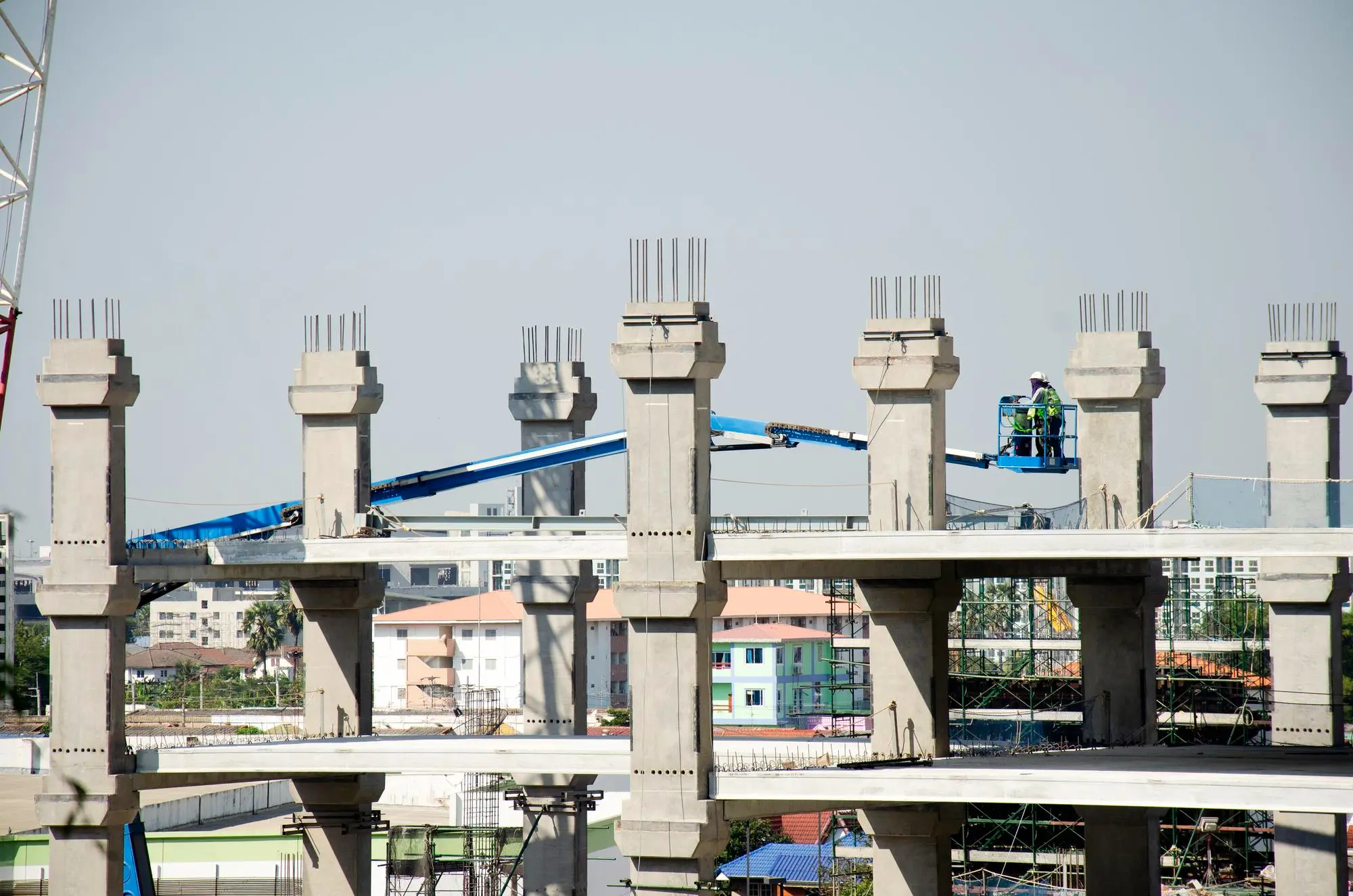
What Does It Take to Supply Precast Solutions for India’s Largest Infrastructure Projects?
Supplying precast products for a small development is one thing.
Supporting a large infrastructure project is something entirely different.
The volumes are larger.
The timelines are stricter.
The engineering requirements are more complex.
And when hundreds or thousands of components are involved, even a small inconsistency can create challenges across the project.
So, what does it actually take to manufacture and supply precast solutions for some of India’s largest infrastructure developments?
The answer goes far beyond simply producing concrete products.
It Starts With Understanding the Project
Every large infrastructure project is different.
A renewable energy park does not have the same requirements as a transportation corridor. An industrial facility operates differently from a residential township.
Even projects within the same sector can have completely different site conditions, timelines, technical requirements, and infrastructure needs.
That is why supplying precast solutions begins with understanding where and how the products will be used.
At Sachi Precast, our experience spans renewable energy, transportation, industrial, commercial, residential, and large-scale infrastructure developments.
Working across different sectors has helped us understand one important reality: there is rarely a one-size-fits-all approach to major construction projects.
Manufacturing One Product Is Easy. Manufacturing Consistently at Scale Is the Challenge.
Imagine manufacturing one precast component.
Now imagine manufacturing hundreds of them.
Every component needs to meet the required dimensions. Every batch needs consistent quality. Production schedules need to align with project requirements.
Products need to be inspected, stored, transported, and delivered according to the construction sequence.
This is where manufacturing capability becomes critical.
Large infrastructure projects require more than production capacity. They require consistency.
As we explored in Why Concrete Doesn’t Become Strong Overnight (And Why Curing Matters), the performance of concrete depends heavily on the processes followed during manufacturing and curing.
When production happens at scale, those processes become even more important.
Quality Control Cannot Be an Afterthought
On large projects, quality cannot simply be checked at the end of production.
It needs to be considered throughout the manufacturing process.
That includes material selection, production processes, dimensional accuracy, curing, inspection, handling, and storage.
Why?
Because a small inconsistency repeated across hundreds of products can become a much larger problem at the construction site.
This is one reason controlled precast manufacturing environments are becoming increasingly relevant for modern infrastructure development.
The goal is not simply to manufacture more.
It is to manufacture consistently.
Experience With Complex Projects Matters
Large projects often present challenges that cannot always be predicted on paper.
Site requirements evolve. Construction schedules change. Logistics become complicated. Coordination between different teams becomes increasingly important.
Previous project experience helps manufacturers better understand these realities.
Sachi Precast has supported major developments including the Adani Green Renewable Park, NTPC Solar Park, Tata Power Mundra, and the Mumbai–Ahmedabad Bullet Train Project.
Each sector presents different requirements.
But they share one common characteristic: the need for reliable infrastructure.
Renewable Energy Projects Present Their Own Infrastructure Challenges
When people think about renewable energy projects, they naturally think about solar panels, turbines, and power generation.
But long before energy generation begins, extensive infrastructure needs to be developed.
Drainage systems. Road networks. Utility infrastructure. Water management. Boundary systems. Civil infrastructure.
Large renewable energy developments require construction solutions capable of supporting projects spread across significant areas.
Our experience supporting the Adani Green Renewable Park, NTPC Solar Park, and Tata Power Mundra has contributed to Sachi Precast’s understanding of infrastructure requirements within the energy sector.
Transportation Infrastructure Demands Precision and Planning
Transportation projects operate on a different scale.
Roads, railways, metro systems, and high-speed transportation corridors require extensive planning and coordination.
Products may need to be manufactured away from the final project location. Transportation schedules need to align with construction activities. Installation sequences must be carefully planned.
Our experience supporting the Mumbai–Ahmedabad Bullet Train Project reflects the growing role of precast solutions in modern transportation infrastructure.
The same broader trend can be seen across India.
As explored in our recent article on Nagpur Metro’s 120-tonne precast pier arms, major infrastructure developments are increasingly using off-site manufacturing and planned installation to manage complex construction requirements.
Logistics Can Be Just as Important as Manufacturing
A precast product is only useful when it reaches the project site safely and at the right time.
Large projects require careful coordination between production, storage, transportation, site readiness, delivery schedules, and installation requirements.
Deliver too early and the site may not have space to store products.
Deliver too late and construction activities may be affected.
Manufacturing and logistics therefore need to work together.
This is why predictability is becoming one of the most valuable assets in modern construction.
Large Projects Rarely Need Just One Product
Infrastructure systems are complex.
A single development may require solutions for drainage, water management, access, utilities, boundaries, and other applications.
Sachi Precast manufactures a diverse portfolio including RCC Pipes, Box Culverts, Precast Boundary Walls, and U-Shaped Channel Sections.
Our broader product range also includes junction chambers, manholes, staircases, solid slabs, and customised precast solutions.
Having experience across multiple precast applications helps manufacturers understand how different infrastructure requirements work together within larger developments.
Sometimes Standard Products Aren’t Enough
Large projects often come with unique requirements.
Site conditions may be unusual. Dimensions may vary. Applications may require project-specific solutions.
This is where customisation becomes important.
Custom precast manufacturing allows products to be developed around specific engineering and application requirements rather than forcing every project to work around standard solutions.
For infrastructure developers and EPC contractors, this flexibility can become particularly valuable when working on complex projects.
Communication Becomes Critical at Scale
The larger the project, the more people are involved.
Developers. EPC contractors. Engineers. Consultants. Manufacturers. Transport teams. Site teams. Project managers.
Without clear communication, even small misunderstandings can create delays.
A reliable precast partner therefore needs to contribute more than manufacturing capacity.
They need to communicate clearly about production, technical requirements, timelines, delivery, and project coordination.
This is one of the reasons we believe choosing the right precast partner can significantly influence project execution.
Large Infrastructure Projects Are Ultimately About Long-Term Performance
Infrastructure is not built for a few months.
It is built to perform for years and often decades.
That changes how construction decisions should be evaluated.
The lowest immediate cost may not always deliver the strongest long-term outcome. The fastest short-term solution may create challenges later.
This is why Sachi Precast believes infrastructure decisions should consider durability, manufacturing quality, consistency, maintenance, and long-term performance.
We explore this philosophy further in Why We Focus on Long-Term Performance Instead of Short-Term Solutions.
So, What Does It Really Take?
Supplying precast solutions for large infrastructure projects requires multiple capabilities working together.
Manufacturing capacity. Quality control. Engineering understanding. Project experience. Product diversity. Customisation. Logistics. Communication. Reliable execution.
No single factor is enough.
The ability to bring these capabilities together is what allows precast manufacturers to support increasingly complex infrastructure developments.
How Sachi Precast Supports Large-Scale Infrastructure Development
At Sachi Precast, we manufacture engineered precast solutions for infrastructure, renewable energy, transportation, industrial, commercial, and residential developments across Gujarat and India.
Our experience includes supporting projects associated with the Adani Green Renewable Park, NTPC Solar Park, Tata Power Mundra, and the Mumbai–Ahmedabad Bullet Train Project.
From RCC Pipes and Box Culverts to Precast Boundary Walls, U-Shaped Channel Sections, and customised precast solutions, our focus remains on supporting projects through manufacturing consistency, engineering expertise, dependable execution, and long-term thinking.
For a broader understanding of precast technology and its growing role across modern construction, explore our complete guide to Precast Construction in Gujarat.
Frequently Asked Questions
What does it take to supply precast products for large infrastructure projects?
Large infrastructure projects require manufacturing capacity, consistent quality control, engineering expertise, reliable logistics, project coordination, product diversity, and experience handling complex construction requirements.
Why is manufacturing consistency important for large projects?
Large projects may require hundreds or thousands of components. Maintaining consistent dimensions, quality, and performance across production helps support smoother project execution.
What types of infrastructure projects use precast concrete?
Precast concrete is used across transportation, renewable energy, industrial, commercial, residential, urban infrastructure, drainage, water management, and public infrastructure projects.
Does Sachi Precast provide customised precast solutions?
Yes. In addition to standard products, Sachi Precast manufactures customised precast solutions designed around specific project and application requirements.
Has Sachi Precast supported major infrastructure projects?
Yes. Sachi Precast has experience supporting developments associated with Adani Green Renewable Park, NTPC Solar Park, Tata Power Mundra, and the Mumbai–Ahmedabad Bullet Train Project.
Build Smarter With Sachi Precast
From ready-made precast components to fully customized solutions, we handle everything from manufacturing to on-site erection — delivering faster, stronger, and more efficient construction outcomes.