
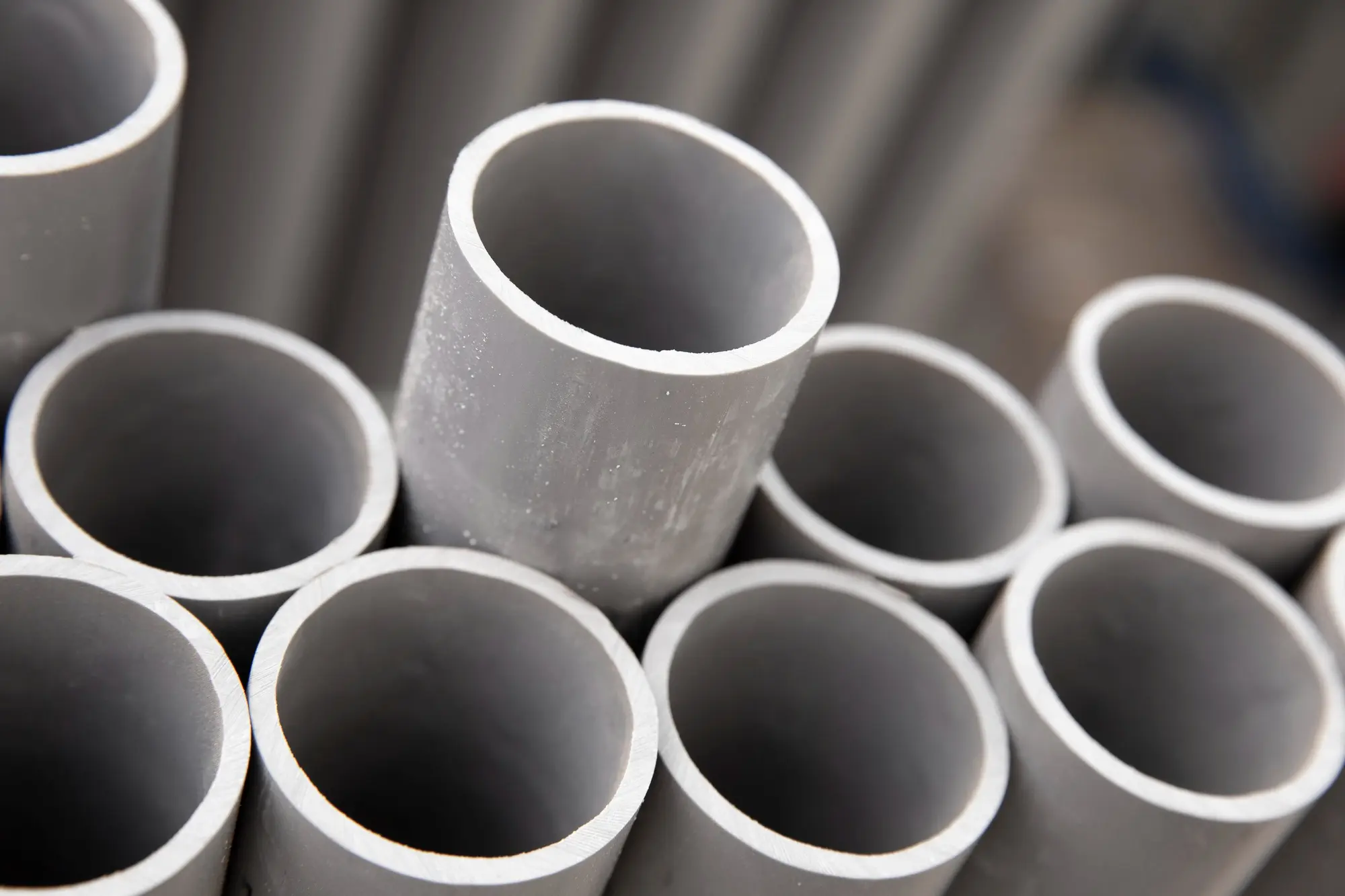
What Is an RCC Pipe? Uses, Types, Sizes & Applications Explained
Every day, millions of litres of water flow beneath our roads, cities, industrial parks, airports, and residential communities.
Most people never think about where that water goes.
But without a properly designed underground drainage system, roads would flood, industries would struggle during heavy rainfall, and cities would experience frequent waterlogging.
One of the most important components of these underground networks is the RCC pipe.
You've probably driven over thousands of them without ever knowing they were there.
So, what exactly is an RCC pipe, and why is it used in so many infrastructure projects?
What Is an RCC Pipe?
An RCC (Reinforced Cement Concrete) pipe is a concrete pipe strengthened with steel reinforcement to improve its structural performance and durability.
Unlike ordinary concrete pipes, RCC pipes are designed to withstand external loads from soil, traffic, and other infrastructure while safely carrying water or wastewater underground.
Because of their strength and long service life, RCC pipes are widely used in:
- Stormwater drainage
- Sewerage systems
- Irrigation projects
- Highway construction
- Railway infrastructure
- Industrial developments
- Residential townships
- Urban infrastructure
At Sachi Precast, RCC Pipes are manufactured for projects across infrastructure, renewable energy, industrial, commercial, and residential sectors.
Why Are RCC Pipes Used?
Think about what happens during heavy rainfall.
Rainwater falls onto roads, buildings, parking areas, and factories.
That water cannot simply remain on the surface.
It needs a safe route underground.
RCC pipes provide that pathway.
They transport water from one location to another while protecting surrounding infrastructure.
Without properly designed drainage systems, roads may flood, foundations may weaken, and construction projects may face long-term maintenance challenges.
Where Are RCC Pipes Commonly Used?
One of the biggest advantages of RCC pipes is their versatility.
They are commonly used in:
Stormwater Drainage
Helping move rainwater away from roads, residential areas, and industrial developments.
Sewerage Networks
Transporting wastewater through underground utility systems.
Highway Projects
Supporting roadside drainage and water crossings.
Railway Infrastructure
Managing water beneath railway corridors.
Industrial Developments
Providing drainage infrastructure for factories, logistics parks, and manufacturing facilities.
Renewable Energy Projects
Supporting civil infrastructure within large solar and renewable energy developments.
Projects supported by Sachi Precast, including the Adani Green Renewable Park, NTPC Solar Park, and Tata Power Mundra, demonstrate how important supporting infrastructure is to modern energy projects.
How Are RCC Pipes Made?
Although the finished product appears simple, manufacturing an RCC pipe involves several carefully controlled stages.
These generally include:
- Preparing reinforcement cages
- Preparing moulds
- Placing concrete
- Compaction
- Curing
- Inspection
- Quality checks
One of the most important stages is curing.
As explained in Why Concrete Doesn't Become Strong Overnight (And Why Curing Matters), concrete develops its strength gradually over time.
Proper curing plays a significant role in long-term performance.
What Sizes Do RCC Pipes Come In?
RCC pipes are manufactured in various diameters depending on project requirements.
The required size depends on factors such as:
- Water flow
- Drainage capacity
- Installation depth
- Soil conditions
- Engineering design
- Applicable standards
Rather than selecting the largest pipe available, engineers calculate the appropriate size based on the specific needs of the project.
What Are NP2, NP3 and NP4 RCC Pipes?
If you've looked at RCC pipe specifications, you've probably seen terms like NP2, NP3, and NP4.
These indicate different non-pressure classes designed for different loading conditions.
Choosing the appropriate class depends on the project's structural design and engineering requirements.
If you'd like a detailed explanation, read our guide on NP2 vs NP3 vs NP4 RCC Pipes: What's the Difference?.
Why Do Many Infrastructure Projects Choose RCC Pipes?
There are several reasons RCC pipes continue to be widely used.
They offer:
- High structural strength
- Long service life
- Suitability for underground infrastructure
- Reliable performance under external loading
- Compatibility with large drainage systems
Their widespread use across highways, industrial developments, municipalities, and infrastructure projects reflects these practical advantages.
RCC Pipes Are Only One Part of the Drainage System
A drainage network is much more than pipes alone.
Many projects combine:
- RCC Pipes
- Precast Box Culverts
- U-Shaped Channel Sections
- Junction chambers
- Manholes
Each component performs a different role, but together they create an integrated underground infrastructure system.
Why Manufacturing Quality Matters
Two RCC pipes may look almost identical.
That doesn't necessarily mean they are manufactured the same way.
Quality depends on factors such as:
- Raw materials
- Reinforcement
- Manufacturing process
- Curing
- Dimensional accuracy
- Inspection
These processes influence long-term durability and performance.
That's why choosing an experienced manufacturer is important for infrastructure projects.
How Sachi Precast Manufactures RCC Pipes
At Sachi Precast, we manufacture RCC Pipes for infrastructure, industrial, commercial, renewable energy, transportation, and residential developments across Gujarat.
Along with RCC pipes, our portfolio includes Precast Box Culverts, Precast Boundary Walls, U-Shaped Channel Sections, junction chambers, manholes, staircases, solid slabs, and customised precast concrete solutions.
Our experience includes supporting projects associated with the Mumbai–Ahmedabad Bullet Train Project, Adani Green Renewable Park, NTPC Solar Park, and Tata Power Mundra.
For a complete overview of modern precast technology, read our guide to Precast Construction in Gujarat.
Frequently Asked Questions
What is an RCC pipe?
An RCC (Reinforced Cement Concrete) pipe is a concrete pipe reinforced with steel to improve its strength and durability. It is widely used for underground drainage, sewerage, irrigation, and infrastructure projects.
What are RCC pipes used for?
RCC pipes are commonly used for stormwater drainage, sewerage systems, irrigation, highway drainage, railway infrastructure, industrial developments, and urban infrastructure projects.
Why are RCC pipes reinforced with steel?
Steel reinforcement helps RCC pipes withstand external loads from soil, traffic, and infrastructure while maintaining structural integrity over time.
How long do RCC pipes last?
When manufactured, installed, and maintained according to project requirements, RCC pipes are designed to provide long-term performance and are widely used in infrastructure expected to operate for decades.
Where can I buy RCC pipes in Gujarat?
Sachi Precast manufactures RCC pipes and other precast concrete products for infrastructure, industrial, commercial, renewable energy, and residential projects across Gujarat.
Build Smarter With Sachi Precast
From ready-made precast components to fully customized solutions, we handle everything from manufacturing to on-site erection — delivering faster, stronger, and more efficient construction outcomes.