
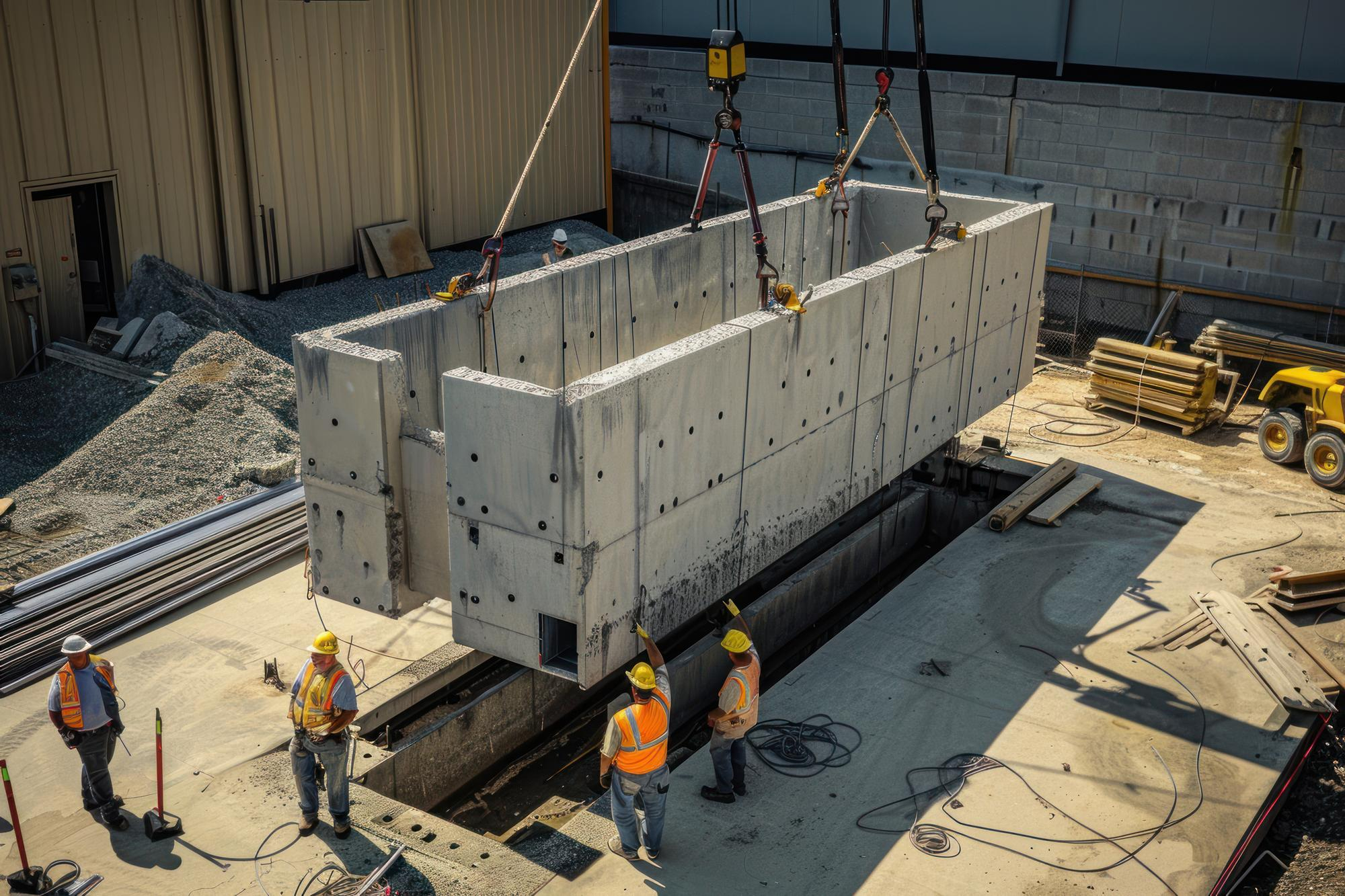
Why We Focus on Long-Term Performance Instead of Short-Term Solutions
Construction projects are often judged by what happens during construction.
Was the project completed on time?
Did it stay within budget?
Were milestones achieved as planned?
While these are important indicators, they only tell part of the story.
The true success of a project is often determined years after construction is complete.
Will the infrastructure continue performing efficiently?
Will maintenance remain manageable?
Will the project support future growth?
Will it continue delivering value over the long term?
At Sachi Precast, these are the questions that shape how we approach infrastructure. While short-term decisions may influence immediate outcomes, long-term performance is what ultimately defines a successful project.
Construction Ends. Performance Continues.
A project may take months or years to build, but it can remain operational for decades.
That reality changes how infrastructure should be evaluated.
The most successful developments are rarely judged solely by how they performed during construction. Instead, they are evaluated based on how they continue performing years after project completion.
This applies across renewable energy developments, transportation infrastructure, industrial facilities, commercial projects, and residential communities.
As explored in Lessons from Some of India's Largest Infrastructure and Renewable Energy Projects, projects that perform successfully over long periods are typically built on strong planning, durable infrastructure, and long-term thinking.
Short-Term Decisions Can Create Long-Term Challenges
Many project challenges do not appear immediately.
They emerge years later.
Infrastructure that was not planned for future growth may require expensive modifications.
Drainage systems that seemed sufficient during construction may struggle under long-term operational demands.
Access routes that worked during project execution may become restrictive during daily operations.
This is one reason why we believe infrastructure decisions should be evaluated not only for today's requirements but also for tomorrow's needs.
As discussed in What Developers Often Realize Too Late During Construction, many of the most expensive project challenges originate during planning rather than construction.
Durability Creates Long-Term Value
When evaluating infrastructure, durability matters.
Not because durability is simply a specification.
Because durability influences performance.
Durable infrastructure often contributes to:
- Reduced maintenance requirements
- Improved operational efficiency
- Greater reliability
- Longer service life
- Lower lifecycle costs
This is one reason products such as RCC Pipes, Box Culverts, Precast Boundary Walls, and U-Shaped Channel Sections continue supporting infrastructure projects across Gujarat.
The objective is not simply to install infrastructure.
The objective is to create infrastructure capable of performing reliably for decades.
Why Predictability Matters
One of the most valuable outcomes of long-term planning is predictability.
Projects that prioritize long-term performance often experience fewer surprises because risks are identified earlier and infrastructure requirements are evaluated more thoroughly.
This philosophy aligns closely with the principles discussed in Why Predictability Is Becoming the Most Valuable Asset in Construction.
Predictability helps developers:
- Improve planning
- Reduce risk
- Improve project confidence
- Support operational efficiency
In many cases, predictability becomes a competitive advantage.
Renewable Energy Projects Reinforce This Philosophy
Renewable energy developments provide some of the strongest examples of why long-term performance matters.
Solar parks are expected to operate efficiently for decades.
This means infrastructure decisions made today can continue influencing project outcomes many years into the future.
Projects such as the Adani Green Renewable Park Project, NTPC Solar Park Project, and Tata Power Mundra Project highlight the importance of planning beyond immediate construction requirements.
As discussed in Why Infrastructure Matters More Than Solar Panels in Long-Term Renewable Energy Success, supporting infrastructure often plays a significant role in determining how effectively renewable energy assets perform over time.
Infrastructure Should Support Future Growth
One of the most common characteristics of successful projects is flexibility.
Projects evolve.
Operational requirements change.
Facilities expand.
Technology advances.
Infrastructure designed only for current requirements can become a limitation later.
This is why long-term planning often considers:
- Future capacity requirements
- Expansion opportunities
- Operational growth
- Changing infrastructure needs
Developments that plan for growth are often better positioned to adapt as requirements evolve.
Looking Beyond Initial Costs
Cost remains an important factor in every project.
However, focusing exclusively on initial costs can sometimes obscure the bigger picture.
The lowest upfront cost does not always result in the lowest long-term cost.
Factors such as maintenance, repairs, operational efficiency, and lifecycle performance all contribute to the total value delivered by a project.
This perspective is explored further in With Construction Costs Rising, Is Precast Becoming the Smarter Choice?, where long-term value increasingly influences construction decision-making.
The question is no longer simply:
"What does it cost today?"
The more important question is:
"What value will it deliver over the next 20 years?"
Experience Shapes Long-Term Thinking
Supporting projects across infrastructure, transportation, renewable energy, and industrial sectors provides valuable perspective.
Over time, patterns emerge.
The projects that continue performing successfully often share common characteristics:
- Strong planning
- Infrastructure readiness
- Effective water management
- Accessibility planning
- Durable solutions
- Long-term thinking
Whether supporting the Mumbai–Ahmedabad Bullet Train Project, renewable energy developments, or industrial infrastructure, these principles consistently contribute to stronger outcomes.
How Sachi Precast Approaches Infrastructure Development
At Sachi Precast, we believe infrastructure should be evaluated based on how it performs over time.
Through solutions such as RCC Pipes, Box Culverts, Precast Boundary Walls, and U-Shaped Channel Sections, our focus remains on supporting projects designed for durability, reliability, and long-term operational performance.
Across renewable energy, transportation, industrial, and infrastructure developments, we continue applying the lessons learned from real-world projects throughout Gujarat.
For a deeper understanding of how infrastructure, renewable energy, industrial development, residential construction, and precast solutions are shaping the future of the state, explore our comprehensive guide to Precast Construction in Gujarat.
Frequently Asked Questions
Why is long-term performance important in construction?
Long-term performance influences reliability, maintenance requirements, operational efficiency, and overall project value throughout the lifecycle of a development.
What is the difference between short-term and long-term construction planning?
Short-term planning focuses on immediate construction objectives, while long-term planning considers future operations, maintenance, durability, expansion, and lifecycle performance.
How does infrastructure affect long-term project success?
Infrastructure supports accessibility, drainage, utility systems, water management, operational efficiency, and future growth, all of which contribute to long-term success.
Why do developers evaluate lifecycle costs?
Lifecycle costs help developers understand the total value of a project by considering maintenance, operational performance, repairs, and long-term efficiency.
What role does durability play in infrastructure projects?
Durability helps infrastructure perform reliably over extended periods while reducing maintenance requirements and supporting long-term value.
How does Sachi Precast approach infrastructure development?
Sachi Precast focuses on supporting projects through durable precast solutions designed for long-term reliability, operational efficiency, and lifecycle performance.
Final Thoughts
The success of a project is not determined solely by how quickly it is completed.
It is determined by how effectively it continues performing long after construction is finished.
Because while construction may last months, infrastructure often serves communities, industries, and projects for decades.
That is why we continue focusing on long-term performance instead of short-term solutions.
FAQs
Yes. Modern precast construction supports a wide variety of architectural styles, layouts, and design preferences.
Yes. Precast construction is increasingly used for villas, luxury residences, and premium residential developments.
No. Modern precast solutions are widely used for homes, offices, farmhouses, commercial buildings, and infrastructure projects.
Yes. Precast construction is well-suited to Gujarat's hot summers and monsoon conditions when properly designed.
Build Smarter With Sachi Precast
From ready-made precast components to fully customized solutions, we handle everything from manufacturing to on-site erection — delivering faster, stronger, and more efficient construction outcomes.