
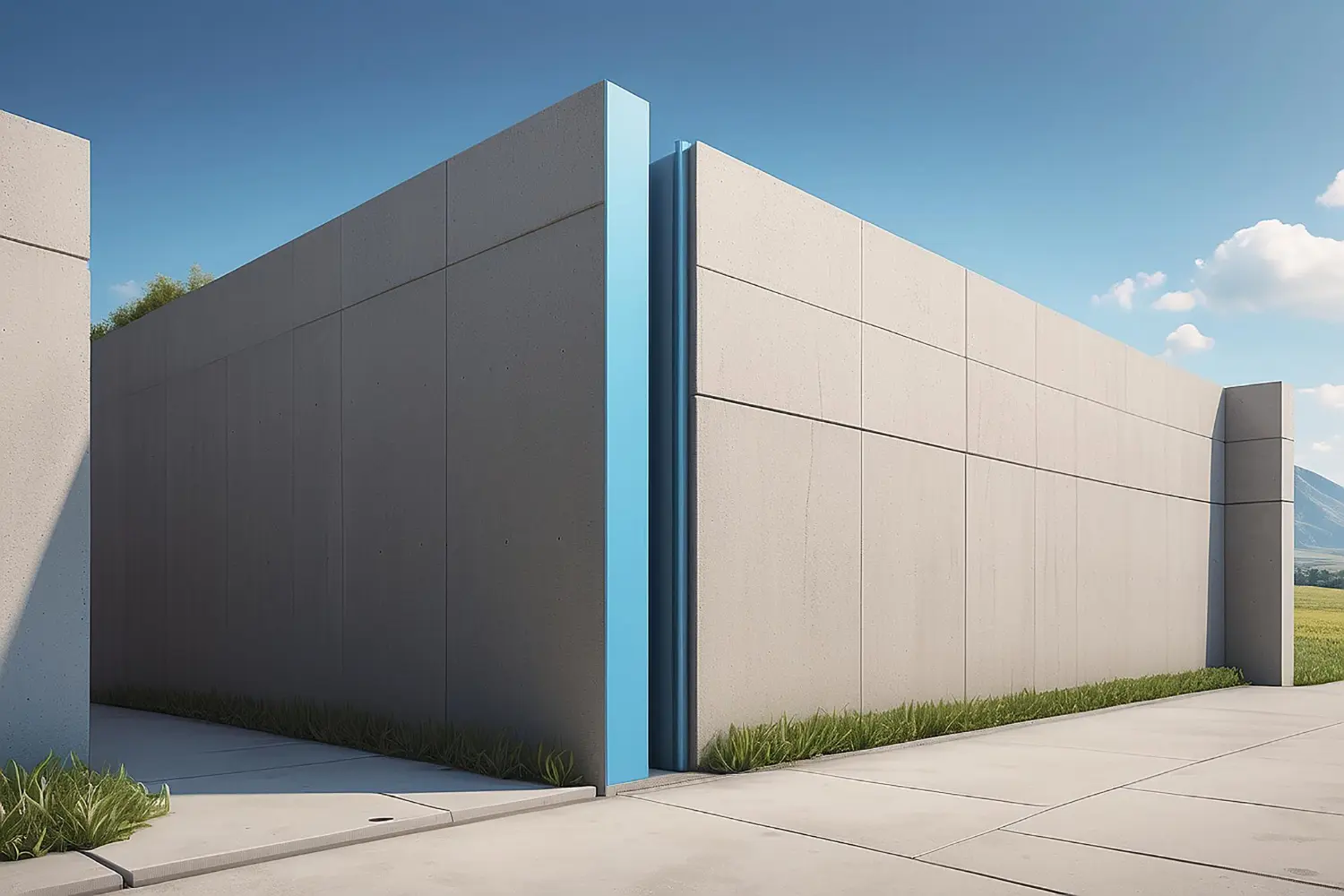
How Much Does a Precast Compound Wall Cost in Gujarat? Factors That Actually Affect the Price
How much does a precast compound wall cost in Gujarat? Understand the factors that affect pricing, including wall size, design, concrete quality, foundation, installation and project requirements.
How Much Does a Precast Compound Wall Cost in Gujarat?
If you're planning a factory, warehouse, industrial plot, residential development, commercial property or infrastructure project in Gujarat, one of the first questions that usually comes up is:
How much will the compound wall cost?
Precast compound walls have become an increasingly practical option for large sites because they can be manufactured in controlled conditions and installed at the project location.
However, there is no single price that applies to every precast compound wall.
The final cost depends on several factors, including the wall's height and length, panel specifications, columns, foundation requirements, site conditions, transportation, installation and the overall project scope.
This is why comparing suppliers only on a quoted price per panel can sometimes be misleading.
A better approach is to understand what actually determines the total project cost.
What Is a Precast Compound Wall?
A precast compound wall is a boundary wall system manufactured using precast concrete components and assembled at the project site.
Depending on the design, the system can include precast wall panels, columns, foundations and other supporting components.
Unlike conventional masonry walls, where bricks or blocks are built and finished at the site, precast walls shift a significant part of the manufacturing process to a controlled production environment.
Sachi Precast manufactures Column Footing and Wall Panels for applications requiring durable and efficient boundary infrastructure.
For a broader look at the advantages, see Top Benefits of Precast Boundary Walls for Industrial Projects.
Is There a Fixed Price for Precast Compound Walls in Gujarat?
No.
Any manufacturer providing a universal price without understanding the project requirements should be approached carefully.
Two projects can have the same wall length but completely different costs.
For example, a 500-metre boundary wall around a level site may have very different requirements from a 500-metre wall around an industrial site with uneven terrain, difficult soil conditions and restricted access.
The quotation should therefore be based on the actual project.
What Factors Affect Precast Compound Wall Cost?
Wall Length
The overall perimeter is one of the most obvious cost factors.
A larger site requires more panels, columns, foundation components, transportation and installation.
The total quantity should therefore be calculated from the actual site perimeter rather than estimated from the plot's area alone.
Wall Height
A taller wall generally requires different panel dimensions, structural considerations and foundation requirements.
The required height should be established before comparing quotations from different manufacturers.
Panel Design and Specifications
Not every precast wall panel is manufactured to the same specifications.
Thickness, dimensions, reinforcement and concrete requirements can affect the manufacturing cost.
For industrial applications, the wall should be selected according to the project's structural and functional requirements rather than simply choosing the cheapest available panel.
Columns and Foundations
The panels are only one part of the compound wall.
Columns and foundations provide the supporting structure required to keep the wall stable.
Different ground conditions and wall configurations can influence foundation requirements.
This is why a quotation that includes only the panel price does not necessarily represent the final installed cost.
Site Conditions
The construction site can have a significant impact on the overall project cost.
Factors may include:
- Uneven terrain
- Soil conditions
- Existing structures
- Underground utilities
- Restricted access
- Distance from unloading areas
- Ground preparation
A manufacturer or contractor should evaluate these factors before finalising installation requirements.
Transportation
Precast components are manufactured at a facility and transported to the project site.
The distance between the manufacturing facility and site can therefore influence the overall cost.
For projects located across Ahmedabad and Gujarat, transportation planning becomes particularly important when ordering large quantities.
Installation
Precast construction can reduce certain site activities, but installation still requires proper equipment, labour and coordination.
The final quotation should clearly establish whether installation is included or charged separately.
Customisation
Some projects require specific dimensions, finishes, configurations or design requirements.
Custom manufacturing can influence production planning and cost compared with standard products.
Why the Cheapest Precast Wall May Not Be the Cheapest Project
Price comparison becomes complicated when different suppliers quote different specifications.
One manufacturer might quote a lower panel price but exclude:
- Columns
- Foundation work
- Transportation
- Installation
- Site preparation
Another supplier might provide a higher initial quotation that includes more of the complete project.
The two prices aren't directly comparable.
For this reason, buyers should compare the complete installed system, not simply the price of an individual panel.
What Should You Ask a Precast Compound Wall Manufacturer?
Before placing a large order, ask the manufacturer to clarify the following.
What Are the Panel Specifications?
Confirm the dimensions, thickness, reinforcement and concrete specifications relevant to your project.
Are Columns Included?
Establish whether columns are included in the quotation or priced separately.
Is Foundation Work Included?
Foundation requirements can vary considerably depending on site conditions.
Is Transportation Included?
Ask whether delivery to the site is included and whether there are additional charges based on distance or unloading requirements.
Is Installation Included?
A complete project quotation should clearly explain whether erection and installation are included.
Can the Manufacturer Handle Large Quantities?
For industrial and infrastructure projects, production capacity matters.
A manufacturer may offer an attractive price but struggle to maintain the required delivery schedule for a large order.
Does the Manufacturer Have Experience With Large Projects?
Relevant project experience can provide confidence in manufacturing, logistics and installation coordination.
Why Precast Compound Walls Are Popular for Industrial Projects
Industrial sites often cover large areas.
Factories, warehouses, manufacturing facilities and logistics parks may require hundreds or thousands of metres of boundary infrastructure.
Traditional masonry construction can involve extensive on-site activity.
Precast systems shift much of the manufacturing process away from the site.
This can help improve construction planning and reduce the amount of wet construction work required at the project location.
For industrial developers working with tight schedules, this predictability can be valuable.
We've explored the broader principle in Why Predictability Is Becoming the Most Valuable Asset in Construction.
Precast Compound Walls for Gujarat's Industrial Growth
Gujarat has a large and diverse industrial ecosystem.
Ahmedabad and surrounding areas continue to develop manufacturing facilities, warehouses, logistics infrastructure and industrial estates.
Industrial corridors and development regions such as Sanand, Changodar, Bavla and Dholera are also driving demand for supporting infrastructure.
A compound wall is often one of the first physical structures constructed around these developments.
It provides site demarcation and forms part of the project's overall civil infrastructure.
For large developments, choosing a manufacturer capable of handling the required volume becomes particularly important.
Why Manufacturing Capacity Matters
Imagine two suppliers quoting for a 2,000-metre industrial boundary wall.
Both offer similar products.
But one can comfortably manufacture the required quantity according to the project's schedule, while the other can only produce smaller batches.
The cheaper quotation may not necessarily result in the cheaper project if delayed deliveries hold up other site activities.
Large-scale manufacturing is therefore about more than production volume.
It involves:
- Production planning
- Quality consistency
- Inventory coordination
- Transportation
- Delivery scheduling
- Site coordination
This is especially important for developers and EPC contractors managing projects with strict deadlines.
Why Quality Should Be Part of the Cost Calculation
A compound wall is expected to remain functional for years.
That means manufacturing quality should be considered alongside initial price.
Concrete quality, reinforcement, curing, dimensions and manufacturing consistency all influence the finished product.
The objective should be to find the right balance between cost and long-term performance.
As discussed in Why We Focus on Long-Term Performance Instead of Short-Term Solutions, infrastructure should be evaluated based on how it performs over its intended service life—not simply what it costs on day one.
Precast Compound Wall vs Traditional Masonry Wall
The right solution depends on the project.
Traditional masonry can be appropriate for certain applications, particularly where highly customised on-site construction is required.
Precast walls can be advantageous where projects prioritise:
- Faster installation
- Repeatable components
- Controlled manufacturing
- Large-scale boundary construction
- Reduced on-site manufacturing
- Predictable project planning
We've compared precast and conventional approaches more broadly in Precast vs Traditional Construction: Which Is Better for Your Project?.
Why Sachi Precast for Large Boundary Wall Requirements?
At Sachi Precast, we manufacture precast concrete solutions for infrastructure, industrial, renewable energy, transportation and commercial developments.
Our Column Footing and Wall Panel solutions are designed to support projects requiring efficient precast boundary infrastructure.
Our wider portfolio includes Precast Tanks, Hume Pipes, Box Culverts, Manhole Chambers, Junction Chambers, Retaining Walls, U Drains, Slope Drains, Solid Slabs and other engineered precast solutions.
Our experience across major infrastructure developments, including the Mumbai–Ahmedabad Bullet Train Project, Adani Green Renewable Park, NTPC Solar Park and Tata Power Mundra, reflects our focus on manufacturing and supplying precast solutions for demanding project environments.
How to Get an Accurate Precast Compound Wall Quote
For an accurate quotation, a manufacturer will typically need information such as:
- Total wall length
- Required wall height
- Site location
- Ground conditions
- Project type
- Required specifications
- Installation requirements
- Delivery requirements
- Project timeline
Providing these details at the beginning helps manufacturers prepare a more realistic project estimate.
It also makes supplier comparison much easier.
Frequently Asked Questions
How much does a precast compound wall cost in Gujarat?
There is no single price because the cost depends on wall height, length, panel specifications, columns, foundations, transportation, installation, site conditions and project requirements.
Is precast compound wall cheaper than brick construction?
It can be cost-effective for many large projects because manufacturing and installation can be planned efficiently, but the final cost depends on the specific site and design. A complete project quotation should be compared rather than only the price per panel.
How long does a precast compound wall last?
The service life depends on concrete quality, reinforcement, design, installation, environmental conditions and maintenance. Properly designed and manufactured precast concrete can provide long-term performance.
Is a precast wall suitable for an industrial plot?
Yes. Precast compound walls are commonly considered for industrial plots, factories, warehouses, logistics facilities and large developments where efficient boundary construction is required.
Can precast compound walls be customised?
Depending on the manufacturer and project requirements, precast wall dimensions, configurations and other specifications can be customised.
What is included in a precast compound wall quotation?
It depends on the supplier. Buyers should specifically confirm whether panels, columns, foundations, transportation, unloading and installation are included.
How do I choose a precast compound wall manufacturer in Gujarat?
Consider manufacturing capacity, product quality, project experience, specifications, delivery capability, installation support and the manufacturer's ability to handle the scale and timeline of your project.
Conclusion
The cost of a precast compound wall in Gujarat depends on far more than the price of a concrete panel.
Wall dimensions, specifications, foundations, site conditions, transportation, installation and manufacturing capacity all contribute to the final project cost.
For large industrial and infrastructure developments, the right manufacturer should therefore be evaluated on total project value rather than the lowest initial quotation.
A reliable precast supplier should be able to combine consistent manufacturing, appropriate engineering, scalable production and dependable delivery.
For developers, contractors and industrial project owners in Ahmedabad and across Gujarat, Sachi Precast provides a broad range of engineered precast solutions backed by experience across major infrastructure and development projects.
Explore the complete Sachi Precast product range or contact the team with your project requirements.
Build Smarter With Sachi Precast
From ready-made precast components to fully customized solutions, we handle everything from manufacturing to on-site erection — delivering faster, stronger, and more efficient construction outcomes.