
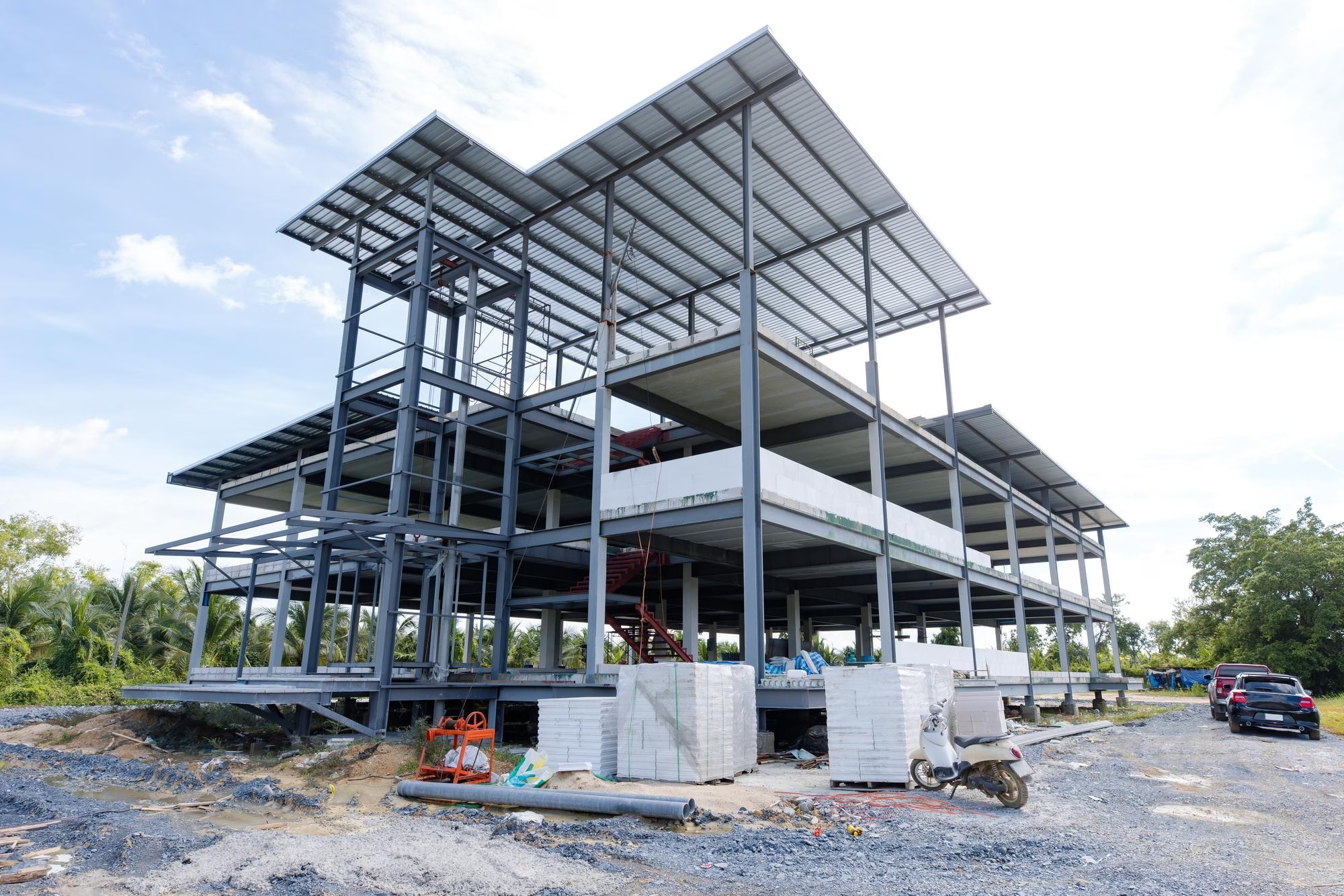
Common Myths About Precast Construction (And What's Actually True)
Mention precast construction to a group of people and you'll probably hear a few common assumptions.
"It's only for government projects."
"It isn't suitable for homes."
"It limits design options."
"It's too expensive."
While these ideas have existed for years, modern precast construction has evolved significantly.
Today, precast concrete is used across residential developments, commercial buildings, industrial facilities, renewable energy projects, transportation infrastructure, and large-scale public works.
So, let's separate myth from reality.
Myth 1: Precast Construction Is Only Used for Infrastructure Projects
This is probably the most common misconception.
While precast concrete has long been used for roads, bridges, drainage systems, and public infrastructure, its applications extend far beyond these sectors.
Today, precast solutions are used for:
- Residential homes
- Villas
- Commercial buildings
- Warehouses
- Industrial facilities
- Renewable energy projects
- Institutional buildings
In fact, we've explored residential applications in Can You Build a Fully Customized Home Using Precast Construction? and commercial applications in Can You Build a Commercial Building Using Precast Construction?.
Myth 2: Precast Means Limited Design Flexibility
Many people assume precast construction follows a single standard design.
That's no longer true.
Modern precast manufacturing allows engineers and architects to develop customised solutions that meet project-specific requirements.
Whether it's a residential villa, an industrial plant, or a renewable energy project, precast components can be designed around functional and structural needs rather than forcing projects into a standard format.
Myth 3: Precast Is Only About Concrete Products
A reliable precast manufacturer contributes far more than individual components.
Modern projects require coordination between products, infrastructure, engineering, logistics, and long-term planning.
Solutions such as RCC Pipes, Box Culverts, Precast Boundary Walls and U-Shaped Channel Sections all play different roles within larger infrastructure systems.
That's why successful projects focus on complete infrastructure planning rather than individual products.
Myth 4: Precast Construction Isn't Suitable for Renewable Energy Projects
Renewable energy developments demand durable infrastructure capable of performing reliably for decades.
That's exactly why precast solutions continue supporting large-scale solar and renewable energy developments across the country.
Projects such as Adani Green Renewable Park, NTPC Solar Park and Tata Power Mundra demonstrate how precast infrastructure contributes to modern energy projects.
You can also read more in Why Renewable Energy Projects Are Choosing Precast Construction.
Myth 5: Precast Is Only About Speed
Speed is certainly an advantage.
But it isn't the only one.
Developers increasingly evaluate construction methods based on:
- Reliability
- Quality
- Consistency
- Long-term durability
- Predictability
- Lifecycle performance
These factors often influence project success more than construction speed alone.
As discussed in Why Predictability Is Becoming the Most Valuable Asset in Construction, predictable execution has become one of the biggest advantages in modern construction.
Myth 6: Precast Doesn't Last as Long
Another common misconception is that precast structures have a shorter lifespan.
In reality, the lifespan of any concrete structure depends on engineering, manufacturing quality, installation, environmental conditions, and maintenance—not whether it is precast or cast on-site.
When manufactured under controlled conditions and installed correctly, precast concrete is designed to deliver reliable long-term performance across residential, commercial, industrial, and infrastructure applications.
This long-term perspective is discussed in Why We Focus on Long-Term Performance Instead of Short-Term Solutions.
Myth 7: Every Precast Manufacturer Is the Same
Perhaps the biggest misconception is assuming every manufacturer delivers the same level of quality.
In reality, manufacturers differ in:
- Engineering expertise
- Production capabilities
- Quality control
- Project experience
- Technical support
- Infrastructure knowledge
That's why choosing the right partner matters just as much as choosing the right product.
If you're evaluating suppliers, our guide on How to Choose the Right Precast Partner for Your Next Construction Project can help.
So, What's Actually True?
The truth is simple.
Modern precast construction has evolved into a versatile construction solution supporting projects across multiple industries.
It is no longer limited to public infrastructure or industrial developments.
Today, it supports:
- Residential communities
- Commercial buildings
- Warehouses
- Renewable energy projects
- Transportation infrastructure
- Urban development
- Industrial facilities
As construction continues evolving, misconceptions are gradually giving way to practical experience and better awareness.
How Sachi Precast Supports Modern Construction
At Sachi Precast, we support residential, commercial, industrial, transportation, infrastructure, and renewable energy projects through engineered precast solutions designed for durability, consistency, and long-term performance.
Our portfolio includes RCC Pipes, Box Culverts, Precast Boundary Walls and U-Shaped Channel Sections, backed by experience across landmark projects throughout Gujarat.
For a deeper understanding of modern precast applications, explore our complete guide to Precast Construction in Gujarat.
Frequently Asked Questions
Is precast construction only used for infrastructure projects?
No. Modern precast construction is widely used in residential, commercial, industrial, renewable energy, institutional, and infrastructure developments.
Can precast buildings be customised?
Yes. Modern precast systems can be engineered to meet project-specific architectural and structural requirements.
Is precast construction suitable for renewable energy projects?
Yes. Precast infrastructure is commonly used in solar parks, substations, utility developments, and other renewable energy projects.
Does precast construction last as long as traditional construction?
When designed, manufactured, and installed correctly, precast concrete provides durable, long-term performance comparable to other concrete construction methods.
Why is choosing the right precast manufacturer important?
An experienced manufacturer contributes engineering expertise, quality control, reliable production, and technical support that help improve overall project success.
FAQs
Yes. Modern precast construction supports a wide variety of architectural styles, layouts, and design preferences.
Yes. Precast construction is increasingly used for villas, luxury residences, and premium residential developments.
No. Modern precast solutions are widely used for homes, offices, farmhouses, commercial buildings, and infrastructure projects.
Yes. Precast construction is well-suited to Gujarat's hot summers and monsoon conditions when properly designed.
Build Smarter With Sachi Precast
From ready-made precast components to fully customized solutions, we handle everything from manufacturing to on-site erection — delivering faster, stronger, and more efficient construction outcomes.