
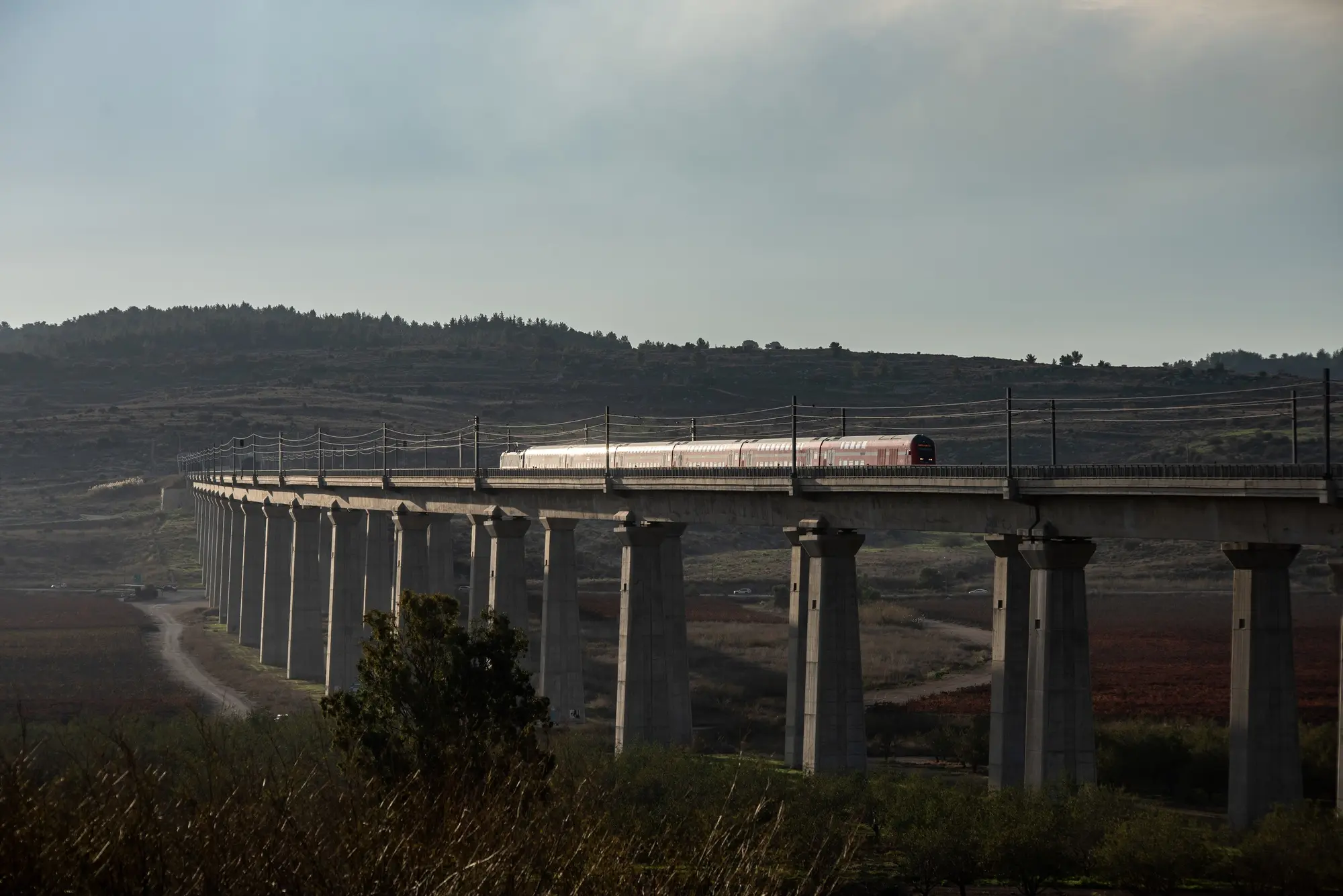
India's Bullet Train Project Just Reached Another Engineering Milestone. Here's Why It Matters for Precast Construction.
The recent milestone isn't just about railways.
It's about how India is increasingly relying on massive precast concrete structures to build complex infrastructure safely and efficiently.
According to the National High Speed Rail Corporation Limited (NHSRCL) and the Ministry of Railways, all 13 heavy portal beams have now been successfully launched in Ahmedabad for the Mumbai–Ahmedabad Bullet Train Project. The largest beam weighs approximately 1,640 tonnes, making it one of the heaviest precast concrete structures ever installed on the project.
Unlike conventional bridge beams, these portal beams are designed to carry the bullet train viaduct over active railway lines while maintaining uninterrupted train operations below. The installations required meticulous planning, heavy lifting equipment, and precision engineering.
This milestone highlights a much larger trend.
Infrastructure Is Becoming Bigger. So Are Precast Components.
Twenty years ago, transporting and installing precast elements weighing more than a thousand tonnes would have seemed extraordinary.
Today, projects like India's first high-speed rail corridor are making it part of routine construction planning.
Rather than casting every structural element in place, engineers increasingly manufacture large concrete components separately before transporting and installing them at precisely planned locations.
This approach improves planning, quality control, and construction sequencing—especially where work must continue over busy railway corridors.
Why Not Cast Everything on Site?
At first glance, manufacturing huge components elsewhere and transporting them sounds more complicated.
In reality, it often reduces uncertainty.
Factory-controlled manufacturing allows greater consistency in reinforcement placement, dimensions, curing, inspection, and production quality before the component even reaches the construction site.
This is one reason we recently explored Why Concrete Doesn't Become Strong Overnight (And Why Curing Matters).
The quality of concrete is determined long before it carries its first load.
Precision Matters More Than Size
The weight of these beams grabs headlines.
But engineers are often more interested in precision.
When lifting a component weighing over a thousand tonnes above operational railway tracks, alignment tolerances become critical.
Installation planning.
Survey control.
Wind monitoring.
Heavy lifting systems.
Real-time coordination.
Every stage has to work together.
That is one of the defining characteristics of modern precast construction.
What This Means for the Future of Indian Infrastructure
The Bullet Train project demonstrates something larger than a single engineering achievement.
India is increasingly embracing construction methods that combine:
- Factory-controlled manufacturing
- Large-scale precast components
- Planned logistics
- Faster installation
- Better coordination
- Long-term infrastructure planning
As transportation, renewable energy, industrial, and urban infrastructure projects continue to grow, precast construction is likely to play an even greater role.
Sachi Precast and the Growing Role of Precast Infrastructure
At Sachi Precast, we understand how important manufacturing consistency and dependable execution are for modern infrastructure.
Our experience includes supporting the Mumbai–Ahmedabad Bullet Train Project along with major developments such as the Adani Green Renewable Park, NTPC Solar Park, and Tata Power Mundra.
From RCC Pipes and Box Culverts to Precast Boundary Walls, U-Shaped Channel Sections, and customised precast solutions, our focus remains on supporting infrastructure that is built to perform over the long term.
To learn more about how precast technology is shaping infrastructure across the state, explore our complete guide to Precast Construction in Gujarat.
Build Smarter With Sachi Precast
From ready-made precast components to fully customized solutions, we handle everything from manufacturing to on-site erection — delivering faster, stronger, and more efficient construction outcomes.