
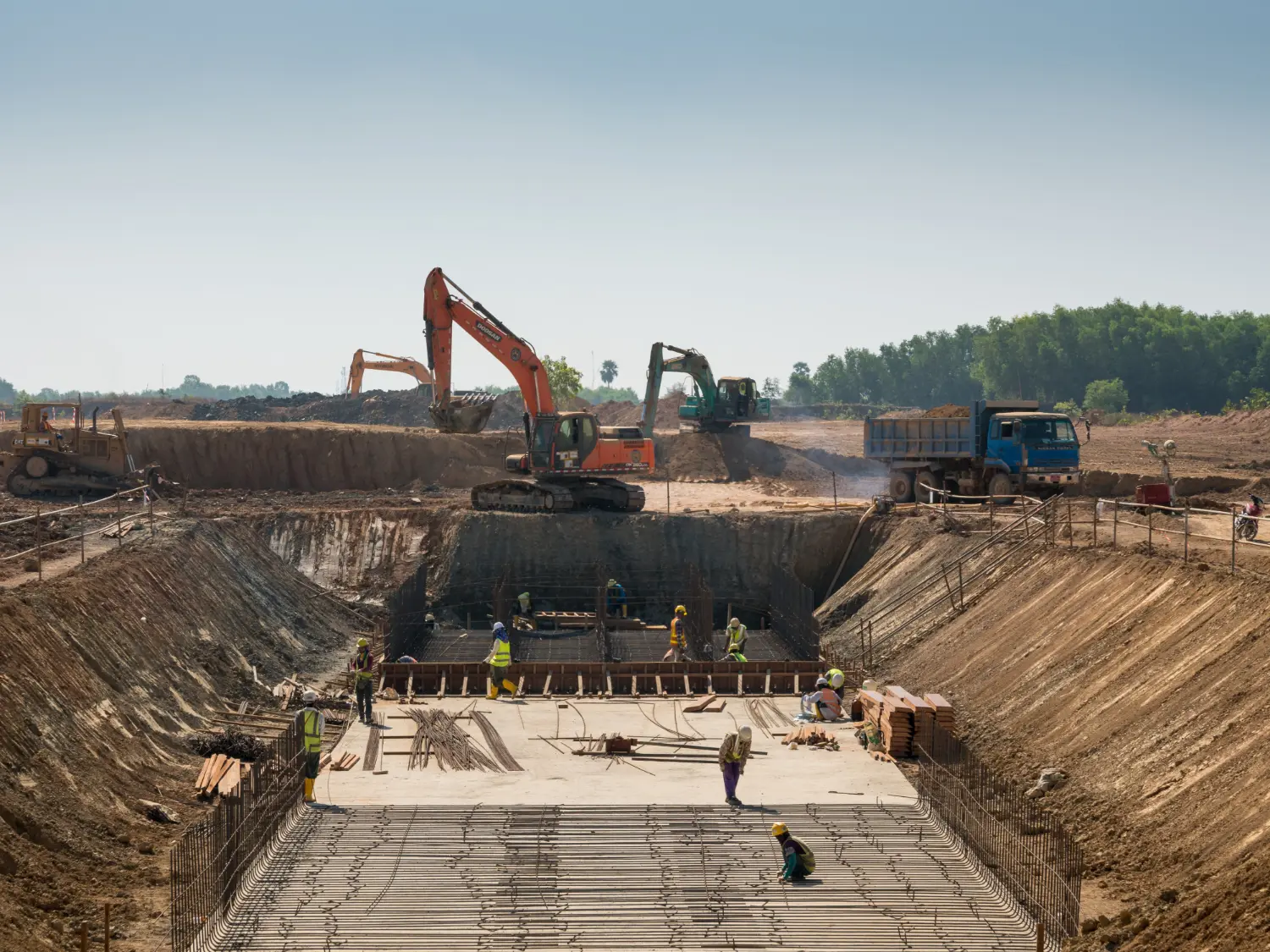
How to Reduce Construction Costs in India Without Delaying Your Project: The Role of Precast Concrete
As construction activity picks up after the monsoon, developers, infrastructure companies and EPC contractors are under pressure to make the most of the available construction window.
For projects in Gujarat and across India, the challenge is not simply to complete construction quickly. It is to deliver the required quality while managing material costs, labour, site operations, weather-related disruptions and project timelines.
A construction project can become expensive even when the initial material rates appear competitive. Delays, rework, inefficient labour deployment, repeated site activities and poor coordination can add costs that were not fully considered during the planning stage.
This is why cost control should begin before construction starts.
One approach gaining attention across infrastructure and industrial construction is precast concrete. By manufacturing suitable concrete components in advance and installing them at the project site, precast construction can help reduce certain on-site activities and improve coordination between manufacturing and site preparation.
However, precast is not automatically the lowest-cost solution for every project. Its value depends on the application, project scale, design, transportation, installation requirements and total cost of execution.
This guide explains practical ways to control construction costs, where precast concrete may help, and what project teams should evaluate before choosing a construction method.
Why construction costs increase during project execution
Construction budgets are influenced by more than the price of cement, steel or concrete.
Many cost increases occur because of decisions made during planning—or because activities are not coordinated effectively once work begins.
Delays between construction activities
Construction often follows a sequence. If one activity is delayed, the next team may be unable to begin.
For example, delays in excavation or foundation preparation can affect drainage installation, roadwork, structural work and other activities scheduled afterward.
When equipment and labour remain idle, the project may incur additional costs.
Weather-related interruptions
Rainfall, high temperatures, waterlogged ground and other local conditions can affect site work.
In Gujarat, project teams must consider both post-monsoon site conditions and the heat that returns during the warmer months. The timing and impact vary by location and project type.
Weather-related delays may affect excavation, concrete placement, transportation, lifting and installation.
Labour and equipment inefficiencies
Labour and equipment costs can increase when activities are not properly sequenced.
Repeated formwork, waiting time, limited site access or unclear responsibilities may reduce productivity.
Material wastage and rework
Incorrect quantities, poor storage, damaged materials or changes to approved drawings can lead to additional procurement and rework.
Late design changes
Changes made after procurement or manufacturing has started can affect material requirements, production schedules and installation planning.
For precast projects, late changes may also affect moulds, component dimensions and delivery arrangements.
Start with total project cost, not only material price
One of the most common mistakes in construction procurement is comparing products only by their initial purchase price.
A lower material price does not necessarily result in a lower completed-project cost.
A more useful comparison considers the full cost of delivering and installing the required component.
What should be included in a cost comparison?
A project-level cost assessment may include:
- Material or manufacturing cost.
- Labour and equipment.
- Formwork and temporary works.
- Transportation and unloading.
- Installation and jointing.
- Site preparation and foundations.
- Testing and quality checks.
- Storage and handling.
- Rework or replacement risk.
- Schedule-related costs.
The exact cost categories vary by project. The objective is to compare equivalent scopes and technical requirements.
For a precast component, the quotation should clearly state whether it includes transportation, unloading, installation, jointing or other site activities.
How precast construction can help control costs
Precast concrete involves manufacturing selected components before transporting them to the final site for installation.
For suitable applications, this can change how work is scheduled and how resources are used.
1. Reduce selected on-site activities
Precast components can reduce the need for certain site-based formwork, reinforcement placement and concrete casting activities.
This may be useful where site space is limited, labour availability is constrained or repetitive concrete work is required.
The amount of work reduced depends on the component design and the construction method being replaced.
2. Allow manufacturing and site preparation to progress in parallel
In conventional sequential construction, some activities cannot begin until earlier work is completed.
With suitable precast components, manufacturing may progress while the site team prepares foundations, access routes or installation areas.
This can improve the overall schedule when both workstreams are properly coordinated.
3. Support more predictable production
Factory-based manufacturing can support repeatable processes and planned production sequences.
This may help project teams coordinate quantities, inspection and delivery.
Actual predictability depends on the manufacturer's production capacity, approved drawings, material availability and project requirements.
4. Reduce certain forms of rework
Consistent manufacturing processes and dimensional checks can help reduce some production inconsistencies.
However, precast construction still requires accurate design, site measurements, suitable lifting arrangements and correct installation.
5. Improve resource planning
When component quantities and delivery sequences are established early, project teams can plan labour, equipment and installation activities more efficiently.
This may reduce waiting time and improve utilisation of resources.
Where precast concrete may be a cost-effective choice
Precast concrete is particularly worth evaluating when a project requires repeated components, coordinated installation or reduced site-based concrete work.
Industrial and commercial site drainage
Industrial facilities, warehouses, logistics parks and commercial developments may require drainage systems across large areas.
Depending on the design, precast U drains with covers, RCC pipes and manhole chambers can form part of the drainage network.
The potential benefit depends on the required drainage capacity, site layout, loading, installation conditions and the construction method being compared.
Road and infrastructure projects
Road projects may require culverts and other drainage components at multiple locations.
Precast box culverts may be considered where the design, dimensions, transportation and installation requirements support their use.
Renewable energy projects
Solar and renewable energy developments may require repeated civil components across large sites.
Suitable precast footings with pedestals and other components can be evaluated as part of the project's foundation and civil works strategy.
The final selection must follow the approved structural and geotechnical design.
Site development with changes in ground level
Projects involving sloped land or changes in elevation may require retaining structures.
Precast retaining walls can be considered where the engineering design and site conditions make them suitable.
How to reduce costs before construction begins
Cost control is most effective when it is built into the planning process rather than treated as a response to budget overruns.
Finalise drawings and specifications
Approved drawings help establish quantities, dimensions and technical requirements.
They also reduce the risk of changes after procurement or manufacturing has begun.
Identify repetitive concrete components
Review the project to identify components that are repeated across the site.
Repetitive components may be suitable for standardised or precast production, depending on design and project requirements.
Compare construction methods at the same scope
A fair comparison should include the complete scope for each option.
For example, a precast quotation that includes manufacturing and delivery should not be compared against an on-site casting estimate that excludes labour, equipment or temporary works.
Plan site access and installation
Precast components require suitable transport routes, unloading arrangements and installation equipment.
Confirming these requirements early can help avoid unexpected site costs.
Coordinate procurement with the construction schedule
Manufacturing and delivery should be aligned with site readiness.
Components arriving too early may require storage. Components arriving too late may delay installation.
Establish quality requirements in advance
Inspection and testing requirements should be clear before production begins.
This helps avoid uncertainty about acceptance criteria and reduces the risk of disputes or rework.
How weather-aware construction planning can protect the budget
Weather is not always within the project's control, but its impact can be managed through planning.
Identify weather-sensitive activities
Project teams should identify activities that may be affected by rainfall, heat, wind or ground conditions.
These may include excavation, concrete placement, lifting, transportation and installation.
Separate suitable manufacturing activities from site activities
Where precast is appropriate, manufacturing can be planned separately from site work.
This may reduce the dependence of selected production activities on conditions at the final site.
Avoid scheduling installation without site readiness
Even when components are ready, installation may be delayed if the site is waterlogged, access routes are unsuitable or foundations are incomplete.
Manufacturing schedules should therefore be coordinated with site readiness and the expected installation sequence.
Plan for local conditions
A construction schedule for Ahmedabad may differ from one for a coastal, flood-prone or colder region.
Weather planning should be based on the project's actual location and seasonal conditions rather than a single national assumption.
What buyers should evaluate before choosing a precast manufacturer
The manufacturer's suitability affects product quality, schedule coordination and the overall procurement experience.
Product range and technical suitability
Confirm that the manufacturer can supply the required component and that its proposed product meets the project's specifications.
Sachi Precast's product range includes RCC pipes, box culverts, U drains, manhole chambers, junction chambers, slope drains, retaining walls, footings, slabs, staircases and other precast solutions.
Manufacturing and delivery planning
Ask how manufacturing, inspection and dispatch will be coordinated with the project schedule.
Confirm the expected lead time and whether delivery can be planned according to the installation sequence.
Quality documentation
Clarify the applicable standards, drawings, inspection requirements and testing documentation for the product.
Do not assume that every product has the same specification or acceptance criteria.
Transportation and installation scope
Confirm whether the quotation includes transportation, unloading, lifting, installation, jointing or other site activities.
Clear scope definitions help prevent cost differences from appearing later.
Relevant project experience
Review the manufacturer's experience with projects of similar scale, application and technical requirements.
Sachi Precast's published portfolio includes the Adani Green Renewable Park, NTPC Solar Park, Tata Power Mundra and the Mumbai–Ahmedabad Bullet Train project.
Is precast always cheaper than conventional construction?
No. Precast construction is not automatically cheaper for every application.
The cost advantage depends on factors such as:
- Project scale and repetition.
- Component dimensions and weight.
- Manufacturing requirements.
- Transportation distance.
- Site access and lifting equipment.
- Installation and connection details.
- Programme requirements.
- The conventional construction method being compared.
For small, highly customised or difficult-to-transport components, conventional construction may be more suitable.
The best decision comes from comparing technically equivalent options using the complete project cost.
Frequently Asked Questions
How can construction costs be reduced without compromising quality?
Begin with accurate planning, approved drawings, clear specifications and a realistic schedule. Compare construction methods using total installed cost, coordinate procurement with site readiness and establish quality requirements before work begins.
Can precast construction reduce labour costs?
It may reduce certain on-site activities and labour requirements for suitable applications. However, manufacturing, transportation and installation still require skilled personnel. The overall labour impact depends on the project and the method being replaced.
Is precast concrete suitable for industrial projects?
Precast concrete is used in many industrial and infrastructure applications. Suitability depends on the structural design, product requirements, site conditions and installation method.
Can precast construction help during the post-monsoon season?
It can help project teams coordinate manufacturing with site preparation and reduce some on-site casting activities. However, site access, transportation, lifting and installation may still be affected by weather.
What information is required for a precast quotation?
Buyers should provide the product type, approved drawings, dimensions, quantities, technical specifications, delivery location, required schedule and the expected scope of supply or installation.
Conclusion
Reducing construction costs requires more than negotiating lower material rates. It requires controlling the activities, resources and risks that influence the total cost of project execution.
For suitable applications, precast concrete can help reduce selected on-site activities, support parallel manufacturing and site preparation, and improve installation planning.
The strongest results come from evaluating precast as part of the complete construction strategy—with careful attention to product suitability, transportation, installation, quality and scheduling.
As projects move through the post-monsoon construction period, developers and contractors can use this time to review upcoming civil works, identify suitable precast components and coordinate procurement before the next seasonal constraints.
Sachi Precast supplies precast concrete solutions for infrastructure, industrial and renewable energy projects. To discuss your project requirements, visit Sachi Precast's contact page.
Build Smarter With Sachi Precast
From ready-made precast components to fully customized solutions, we handle everything from manufacturing to on-site erection — delivering faster, stronger, and more efficient construction outcomes.