
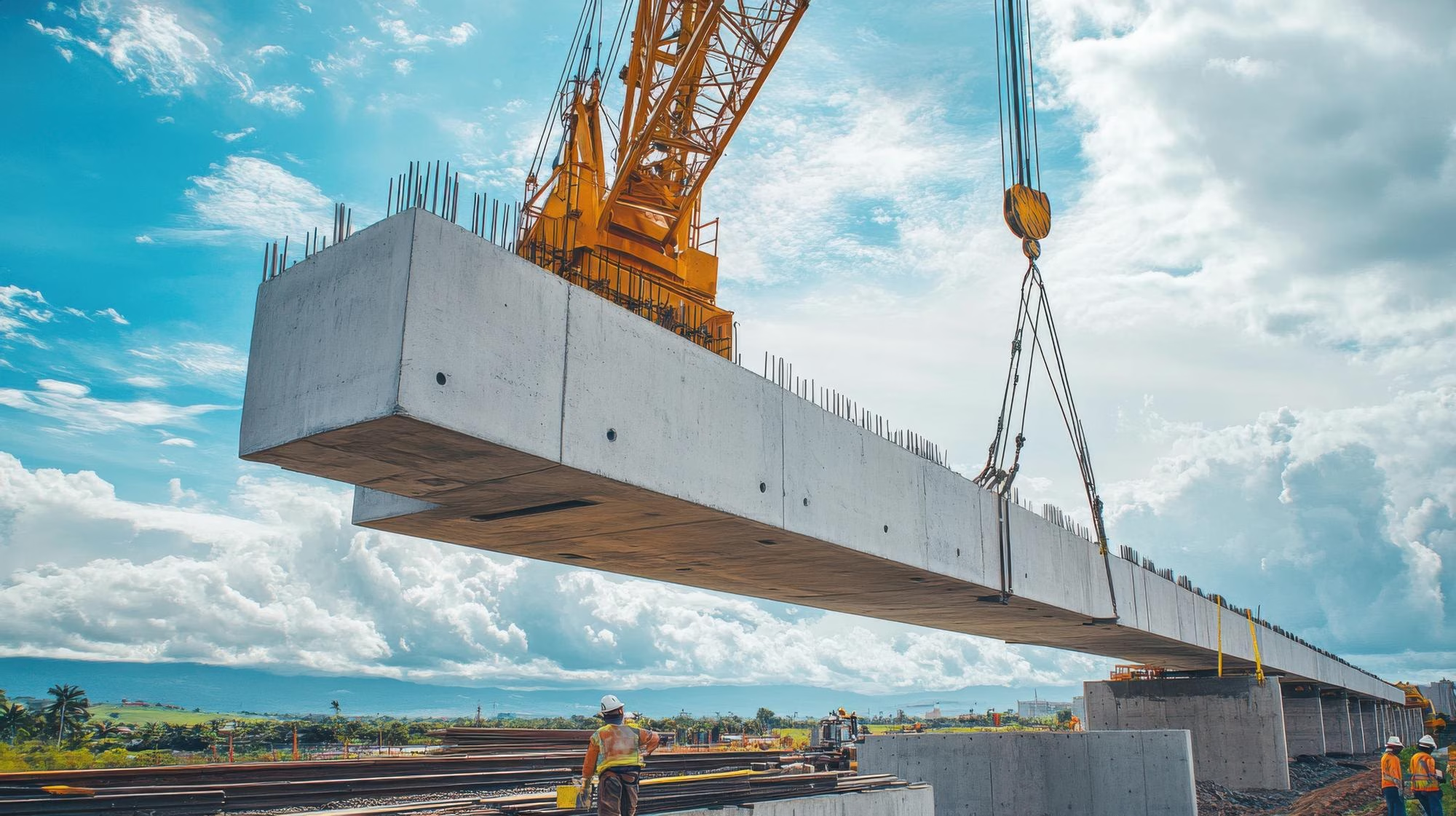
Why Concrete Doesn't Become Strong Overnight (And Why Curing Matters)
One of the biggest misconceptions about concrete is that it becomes "ready" as soon as it hardens.
It doesn't.
Concrete may look solid within a day, but that's only the beginning of a much longer process.
The strength, durability, and long-term performance of concrete depend on something that happens after it's placed—curing.
Whether it's supporting a residential home, a commercial building, a solar park, or major infrastructure, properly cured concrete is essential for long-lasting performance.
Hardening and Strength Are Not the Same Thing
Fresh concrete begins to harden within hours.
That doesn't mean it has reached its full strength.
Concrete gains strength gradually as cement reacts with water in a process called hydration.
This process continues over days and even weeks.
That's why engineers don't judge concrete solely by how it looks—they evaluate whether it has developed the strength required for its intended application.
So, What Exactly Is Curing?
Curing is the process of maintaining suitable moisture and temperature conditions so concrete can continue hydrating properly.
Without proper curing, concrete may not develop the strength or durability it was designed to achieve.
Good curing helps improve:
- Strength development
- Surface durability
- Crack resistance
- Long-term performance
- Structural reliability
It's one of the most important stages in concrete manufacturing, even though it's often overlooked.
Why Controlled Manufacturing Makes a Difference
One advantage of precast construction is that manufacturing takes place in a controlled environment rather than entirely on an active construction site.
This allows manufacturers to monitor production conditions more consistently while following established quality processes.
Although every project has different requirements, controlled manufacturing environments often provide greater consistency than conditions affected by changing weather or site constraints.
This is one reason modern precast construction continues to be adopted across residential, commercial, industrial, and infrastructure projects.
Why This Matters for Infrastructure
Infrastructure isn't expected to perform for just a few years.
Many projects are designed to remain operational for decades.
Products such as RCC Pipes, Box Culverts, Precast Boundary Walls and U-Shaped Channel Sections are often used in environments where durability and long-term performance are essential.
That makes manufacturing quality and curing important considerations—not just production steps.
Does Concrete Keep Getting Stronger?
Yes.
Concrete continues gaining strength well beyond the first few days.
While many structural evaluations are commonly based on the strength achieved after approximately 28 days, hydration can continue beyond that under suitable conditions.
The important point is that concrete develops strength over time rather than overnight.
Why Patience Often Leads to Better Performance
In construction, speed is valuable.
But some processes simply cannot be rushed.
Concrete that is allowed to develop properly is better positioned to deliver reliable long-term performance.
This aligns with the philosophy discussed in Why We Focus on Long-Term Performance Instead of Short-Term Solutions.
Projects designed for decades of service begin with attention to the details that happen long before construction is complete.
Quality Begins Before Installation
Many people judge construction quality after products arrive on site.
In reality, quality begins much earlier.
It starts with:
- Engineering
- Material selection
- Manufacturing
- Quality control
- Curing
- Inspection
Every stage contributes to the finished product.
This broader approach is one reason developers increasingly evaluate manufacturers based on their processes rather than simply comparing prices.
As explored in What Makes a Reliable Precast Manufacturer?, dependable manufacturing practices play a significant role in project success.
How Sachi Precast Approaches Quality
At Sachi Precast, quality begins long before a product reaches a construction site.
From engineering and manufacturing to inspection and delivery, every stage is carried out with a focus on consistency, durability, and long-term performance.
Our portfolio includes RCC Pipes, Box Culverts, Precast Boundary Walls and U-Shaped Channel Sections, supporting infrastructure, commercial, industrial, renewable energy, and residential projects across Gujarat.
To learn more about how precast technology is shaping modern construction, explore our complete guide to Precast Construction in Gujarat.
Frequently Asked Questions
Why doesn't concrete become strong immediately?
Concrete gains strength gradually through a chemical process called hydration. While it hardens within hours, it continues developing strength over time.
What is curing in concrete?
Curing is the process of maintaining suitable moisture and temperature conditions so concrete can continue hydrating and develop its intended strength and durability.
Why is curing important?
Proper curing helps improve strength, durability, crack resistance, and long-term structural performance.
Does precast concrete require curing?
Yes. Like all concrete products, precast components require appropriate curing as part of the manufacturing process to achieve their designed performance.
Why do manufacturers use controlled production environments?
Controlled manufacturing environments help maintain consistency during production, allowing manufacturers to monitor processes more effectively than is often possible under changing site conditions.
FAQs
Yes. Modern precast construction supports a wide variety of architectural styles, layouts, and design preferences.
Yes. Precast construction is increasingly used for villas, luxury residences, and premium residential developments.
No. Modern precast solutions are widely used for homes, offices, farmhouses, commercial buildings, and infrastructure projects.
Yes. Precast construction is well-suited to Gujarat's hot summers and monsoon conditions when properly designed.
Build Smarter With Sachi Precast
From ready-made precast components to fully customized solutions, we handle everything from manufacturing to on-site erection — delivering faster, stronger, and more efficient construction outcomes.