
Precast Drainage Channels in Ahmedabad: Types, Applications, Cost Factors & Buying Guide
Drainage is one of the most important parts of any construction or infrastructure project, even though much of it eventually becomes invisible.
Roads, industrial facilities, warehouses, residential developments, commercial properties and renewable-energy projects all need a reliable way to collect and move rainwater, surface runoff or wastewater. When drainage is poorly planned, water can accumulate around roads, buildings and open areas, potentially affecting surrounding infrastructure and increasing maintenance requirements.
This is where precast drainage channels can provide a practical solution.
Precast concrete drainage channels are manufactured before being transported to the project site, where they are installed as part of the project's drainage network. Depending on the application, the system may include U drains, covered drains, RCC pipes, manhole chambers, junction chambers, box culverts and other precast components.
For contractors, developers and infrastructure companies searching for a precast drainage channel manufacturer in Ahmedabad, understanding the different options is important before selecting a product.
Sachi Precast manufactures a range of precast infrastructure products, including U Drains with Covers, Manhole Chambers, RCC Hume Pipes and Box Culverts.
What Is a Precast Drainage Channel?
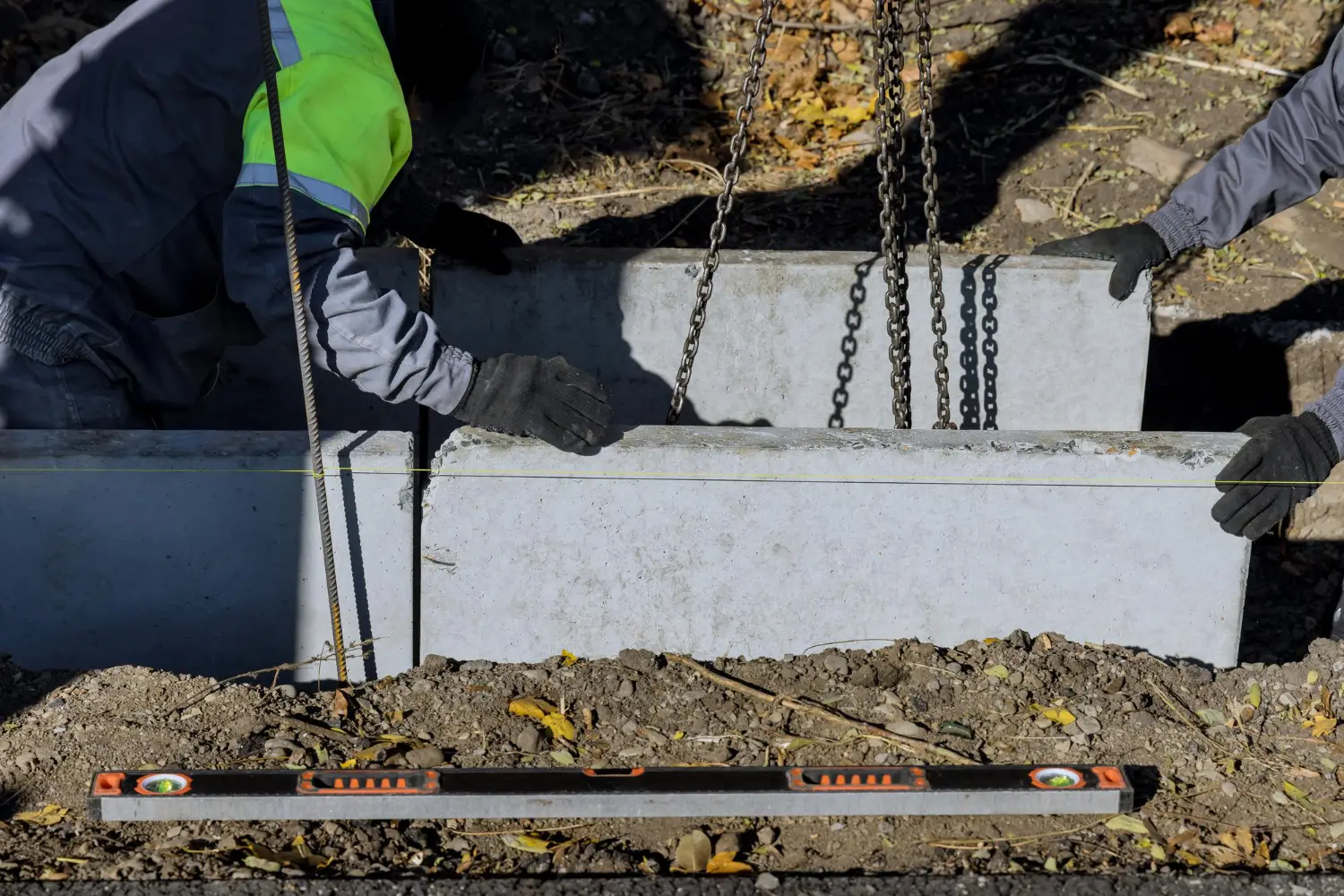
A precast drainage channel is a concrete drainage component manufactured in a controlled production environment and transported to the construction site for installation.
The channel provides a defined path for water to flow from one point to another.
Depending on the project design, drainage channels can be used for:
- Stormwater drainage
- Roadside drainage
- Industrial drainage
- Surface-water collection
- Commercial site drainage
- Residential development drainage
- Solar park drainage
- Internal road drainage
- Utility and infrastructure applications
One commonly used configuration is the U-shaped precast drain.
The U-shaped profile creates a channel through which water can flow, while the surrounding concrete provides structural support.
Where the drainage line needs to be protected or crossed by pedestrians and vehicles, a cover can be incorporated into the system.
Sachi Precast's U Drain with Cover is designed for applications where a covered precast drainage solution is required.
Why Are Precast Drainage Channels Important?
Rainwater does not simply disappear when it reaches a developed site.
Buildings, concrete surfaces, roads and paved areas reduce natural infiltration and can increase surface runoff. A properly planned drainage network provides a controlled route for that water.
A typical drainage system may combine several components:
Surface runoff → drainage channel → chamber → RCC pipe → culvert or discharge structure
Each component has a different role.
For example, a precast U drain can collect and carry surface water, while a manhole chamber can provide an accessible point within an underground drainage network.
Where a road or other obstruction needs to be crossed, a box culvert may be incorporated into the drainage system.
This is why drainage should be considered as a complete system rather than as a collection of unrelated products.
Types of Precast Drainage Channels
Different projects require different drainage configurations.
U-Shaped Precast Drains
U drains are among the commonly used precast drainage channels for surface-water management.
Their open channel profile provides a defined route for water while allowing easy access for inspection and cleaning.
They can be considered for:
- Roads
- Industrial premises
- Factory compounds
- Warehouses
- Commercial developments
- Parking areas
- Residential developments
- Infrastructure projects
The required dimensions should be determined by the project's drainage design and expected water flow.
U Drains With Covers
Covered U drains add a precast cover over the drainage channel.
This can be useful where the drain is located in an area exposed to pedestrians or vehicle movement.
Covered drainage can also create a more organized finished surface around industrial and commercial properties.
However, the cover specification should be selected according to the expected loading conditions.
RCC Drainage Components
Some drainage systems use RCC pipes and chambers to carry water below ground.
RCC pipes are particularly useful where water needs to travel through an underground pipeline rather than remain in an open surface channel.
Sachi Precast manufactures Hume Pipes for infrastructure applications.
The choice between an open drainage channel and an underground pipe depends on the site layout, water-flow requirements, available space and engineering design.
Junction Chambers
Drainage systems frequently have points where multiple lines connect.
A junction chamber can provide a structured connection point within such a network.
Sachi Precast also offers Junction Chambers as part of its precast infrastructure range.
Slope Drains
Sites with changes in elevation may require controlled movement of water along a slope.
A precast slope drain can form part of a drainage system designed to manage water along sloped areas.
Box Culverts
When drainage water needs to pass beneath roads, access routes or other structures, a box culvert can provide a larger passage for water.
Precast Box Culverts are therefore often considered alongside other drainage components for larger infrastructure projects.
Where Are Precast Drainage Channels Used in Ahmedabad?
Ahmedabad's combination of urban development, industrial expansion, commercial construction and infrastructure projects creates drainage requirements across many different types of sites.
Industrial Areas
Industrial facilities often have large paved areas, internal roads, factory buildings, loading zones and open yards.
Rainwater from these surfaces needs to be collected and directed toward an appropriate discharge or collection system.
Precast drainage channels can be incorporated into the overall stormwater drainage layout.
For large industrial developments, the drainage system may work together with RCC pipes, chambers and culverts.
Sachi Precast's guide on industrial precast manufacturing in Ahmedabad explains some of the considerations developers and EPC contractors should have when selecting a precast partner.
Roads and Highways
Roads are particularly dependent on effective drainage.
Water that remains on or around a road can interfere with traffic movement and contribute to deterioration of surrounding infrastructure.
Precast drainage channels can be positioned along road edges, medians, shoulders and other locations specified by the project's drainage design.
For larger crossings, drainage channels may connect to box culverts or underground RCC pipe networks.
Warehouses and Logistics Parks
Large logistics facilities can have extensive concrete and asphalt surfaces.
Truck movement areas, loading zones and parking areas can generate significant runoff during heavy rainfall.
Drainage channels can help move this water away from critical areas and toward the site's planned drainage network.
Residential Developments
Large housing developments and gated communities require drainage for internal roads, landscaped areas and other paved surfaces.
Precast drainage components can provide a standardized solution for repetitive drainage requirements across the development.
They can also be combined with underground drainage systems and chambers.
For homeowners and developers interested in the wider possibilities of precast construction, Sachi Precast's guide to building a future-ready home in Ahmedabad explores how precast can be used beyond conventional infrastructure.
Commercial and Institutional Projects
Shopping centres, educational campuses, hospitals, hotels and office developments all require surface-water management.
Drainage channels can be incorporated around buildings, parking areas, access roads and other developed surfaces.
Solar Parks and Renewable Energy Projects
Large solar and renewable-energy sites can cover extensive areas and include internal roads, equipment zones and other developed surfaces.
Drainage planning becomes important because uncontrolled runoff can affect roads and surrounding civil infrastructure.
Sachi Precast has supplied precast solutions for renewable-energy developments such as the Adani Green Renewable Park and NTPC Solar Park.
Precast Drainage Channels vs Cast-In-Situ Drains
One of the main decisions for a project is whether drainage should be constructed using precast components or cast directly at the site.
Neither method is automatically suitable for every project.
The decision should be based on project requirements, design complexity, construction schedule, access and cost.
Precast Drainage
Precast drainage can provide advantages where:
- Large quantities are required
- Repetitive dimensions are involved
- Construction speed is important
- Site-based concrete work needs to be reduced
- Consistent components are required
- The project has a planned installation sequence
Because the components are manufactured before delivery, site teams can focus on excavation, preparation, installation, connections and finishing.
Cast-In-Situ Drainage
Cast-in-situ construction can be useful where:
- Drain geometry is highly irregular
- Site conditions change frequently
- Custom dimensions are required throughout the route
- The drainage structure is integrated with other cast-in-place works
- Precast installation is difficult because of access restrictions
For projects involving long stretches of repetitive drainage, however, precast construction can offer significant scheduling advantages.
Sachi Precast's guide on precast construction versus traditional construction provides a broader comparison of the two approaches.
How to Choose the Right Drainage Channel Size
One of the most important mistakes a buyer can make is selecting a drainage channel based only on what is readily available.
The channel should be selected according to the project's engineering requirements.
Water Flow
The expected quantity of water passing through the drainage channel is one of the most important considerations.
A drainage system designed for a small residential development will have different requirements from one serving a large industrial facility.
Catchment Area
The amount of surface area contributing runoff affects the volume of water that the drainage system may need to handle.
Rainfall Conditions
Local rainfall intensity and project-specific drainage calculations need to be considered when designing the system.
Gradient
The slope available along the drainage route affects how water moves through the channel.
Site Layout
The physical arrangement of roads, buildings, parking areas and other structures determines where drainage channels can be positioned.
Loading Conditions
If vehicles will pass over the drainage channel, the structural requirements for the channel and cover need to reflect those conditions.
This is particularly important for industrial facilities, road infrastructure, truck yards and parking areas.
What Affects the Cost of Precast Drainage Channels in Ahmedabad?
A common search among contractors is "precast drainage channel price in Ahmedabad."
However, there is no single price that applies to every precast drainage project.
Several factors affect the final cost.
Channel Dimensions
Larger channels generally require more concrete and reinforcement.
The dimensions therefore have a direct impact on manufacturing cost.
Concrete and Reinforcement Specifications
The required specifications depend on the project's structural and application requirements.
Different applications can require different levels of structural performance.
Covers
If a project requires covered drainage, the cost of the covers and their required loading capacity needs to be considered.
Quantity
A project requiring a few drainage units is different commercially from a project requiring several hundred metres or a large number of components.
Transportation
Precast concrete is heavy.
Transportation distance, vehicle requirements, loading and unloading arrangements can all affect the delivered cost.
Installation
Site preparation, lifting, placement, alignment, connections and backfilling may all contribute to the overall project cost.
Therefore, buyers should compare the total delivered and installed cost rather than looking only at the manufacturing price.
For a broader explanation of precast pricing, see What Determines the Cost of Precast Products in Gujarat?.
What Should You Check Before Ordering Precast Drainage Channels?
Choosing the right product is only the first step.
The manufacturer and contractor should coordinate several details before production begins.
Project Drawings
Provide the manufacturer with the latest approved drawings or specifications.
This helps confirm dimensions, alignment and connection requirements.
Quantity
Clearly communicate the total requirement and expected delivery schedule.
For large projects, production may need to happen in phases.
Drain Dimensions
Confirm the required internal and external dimensions rather than relying on a generic "U drain" specification.
Cover Requirements
If the drainage channel will be covered, clarify whether pedestrian or vehicle loading is expected.
Concrete Specifications
Confirm the concrete specification required by the project.
Reinforcement Requirements
Where reinforcement is required, the manufacturer's proposed product should be aligned with the project's technical specifications.
Delivery Schedule
Discuss when the components will be required at the site.
Manufacturing and dispatch should be coordinated with site readiness.
Site Access
Large precast products require suitable access for transportation, unloading and lifting.
This should be considered before dispatch.
How to Choose a Precast Drainage Channel Manufacturer in Ahmedabad
Ahmedabad and the wider Gujarat market have multiple precast suppliers.
The right manufacturer should be evaluated on overall capability rather than just quotation price.
Manufacturing Capacity
For large projects, the supplier should have sufficient manufacturing capacity to produce the required quantity within the project schedule.
Quality Control
Consistent production is particularly important when multiple drainage components need to connect with one another.
Product Range
A manufacturer offering multiple infrastructure products can simplify procurement.
For example, a project may require U drains, RCC pipes, manhole chambers, junction chambers and box culverts.
Sourcing these components from a coordinated manufacturer can reduce procurement complexity.
You can explore the complete range of Sachi Precast products.
Logistics
Transportation is a major consideration when dealing with heavy precast concrete products.
The manufacturer should be able to coordinate dispatches according to project requirements.
Project Experience
Previous experience with infrastructure, industrial and renewable-energy projects can provide an indication of a manufacturer's ability to manage large-scale supply requirements.
Technical Coordination
Large projects often involve developers, consultants, EPC contractors and site teams.
The manufacturer needs to be able to communicate effectively with these stakeholders.
For a detailed checklist, see How to Choose the Right Precast Concrete Manufacturer in India.
You can also read How to Choose the Right Precast Partner for Your Next Construction Project.
Why Choose Sachi Precast for Drainage Solutions?
Sachi Precast provides precast concrete products for infrastructure, industrial, renewable-energy and development projects.
Its drainage and infrastructure product range includes:
This broader product range is useful for projects where drainage infrastructure consists of several interconnected components.
Sachi Precast has manufacturing facilities in Gujarat and has supplied precast solutions for major infrastructure developments.
Its experience includes projects such as the Mumbai-Ahmedabad Bullet Train project, as well as renewable-energy infrastructure.
For developers and EPC contractors looking for a manufacturer rather than simply a local product supplier, this broader project and manufacturing experience can be an important consideration.
How Precast Drainage Fits Into a Complete Infrastructure System
A drainage channel is rarely used completely on its own.
A large project may require several precast products working together.
For example, surface water may first enter a U drain. The water can then move toward a chamber where different drainage lines connect. From there, it may enter an RCC pipe network before passing beneath a road through a box culvert.
A simplified system could look like:
Surface runoff → U drain → manhole/junction chamber → RCC pipe → box culvert → discharge point
The actual configuration depends entirely on the project's engineering design.
This is why selecting a manufacturer with a wider range of precast infrastructure products can make procurement and coordination easier.
Common Mistakes When Buying Precast Drainage Channels
Choosing Only on Price
The cheapest quotation may not necessarily represent the lowest overall project cost.
Transportation, installation, quality, wastage and replacement requirements should also be considered.
Ignoring Loading Requirements
A drainage channel beneath a vehicle-access area has different requirements from one located in a pedestrian-only area.
Ordering Before Finalising Drawings
Changes after manufacturing can create unnecessary costs and delays.
The final project dimensions should therefore be confirmed before production.
Underestimating Transportation
Heavy precast products require proper logistics planning.
Transportation should be considered from the beginning rather than after manufacturing is complete.
Not Planning Installation
The project team should understand how the drainage components will be unloaded, lifted, positioned and aligned.
Treating Drainage as an Isolated Product
A drainage channel needs to work with the rest of the network.
Pipe connections, chambers, culverts, slopes and discharge points should be considered together.
Frequently Asked Questions About Precast Drainage Channels
What is a precast drainage channel?
A precast drainage channel is a factory-manufactured concrete channel used to collect and transport surface water or other drainage flows. It is transported to the site and installed as part of the project's drainage network.
What is the most common type of precast drainage channel?
U-shaped precast drains are a commonly used configuration for surface-water drainage. Covered U drains can be used where the drainage line needs protection or needs to accommodate pedestrian or vehicle movement.
Where are precast drainage channels used?
They can be used in roads, industrial facilities, warehouses, commercial developments, residential projects, solar parks and other infrastructure developments.
Are precast drainage channels suitable for industrial projects?
Yes, they can be considered for industrial drainage systems, particularly around internal roads, factory premises, yards and other paved areas. The product should be selected according to the project's drainage and structural requirements.
How much does a precast drainage channel cost in Ahmedabad?
The cost depends on factors such as dimensions, concrete and reinforcement specifications, covers, quantity, transportation and installation. A project-specific quotation is therefore more meaningful than a generic price.
What is the difference between a U drain and an RCC pipe?
A U drain is generally an open or covered channel through which water flows, while an RCC pipe provides an enclosed underground passage for water. The appropriate option depends on the site's drainage design.
Can precast drainage channels be used under roads?
They can be used in road-related applications when the channel and cover system are designed for the expected loading conditions. The required specifications should be determined by the project's engineering design.
Do precast drainage channels require covers?
Not always. Open drains can be appropriate in certain locations, while covered drains may be preferable where pedestrians or vehicles need to cross the drainage channel.
How do I choose a precast drainage channel manufacturer in Ahmedabad?
Compare manufacturers based on manufacturing capacity, concrete and reinforcement specifications, quality control, project experience, logistics, product range and ability to meet the required delivery schedule.
Conclusion
A well-designed drainage network is essential for protecting roads, buildings, industrial facilities and other infrastructure from uncontrolled surface water.
Precast drainage channels offer a practical way to create defined drainage routes while moving much of the manufacturing process away from the construction site.
For Ahmedabad and Gujarat projects, U drains, covered drains, RCC pipes, manhole chambers, junction chambers and box culverts can work together as part of a complete drainage system.
The right solution depends on the project's water-flow requirements, dimensions, site conditions, loading, installation method and overall engineering design.
For buyers, the most important decision is therefore not simply finding the lowest-priced drainage channel. It is finding a manufacturer that can consistently produce the required components, manage large quantities, coordinate transportation and support the project schedule.
If you are planning drainage infrastructure for an industrial project, road, warehouse, residential development, commercial property or renewable-energy project, explore the Sachi Precast infrastructure product range or contact Sachi Precast with your project requirements.
Build Smarter With Sachi Precast
From ready-made precast components to fully customized solutions, we handle everything from manufacturing to on-site erection — delivering faster, stronger, and more efficient construction outcomes.