
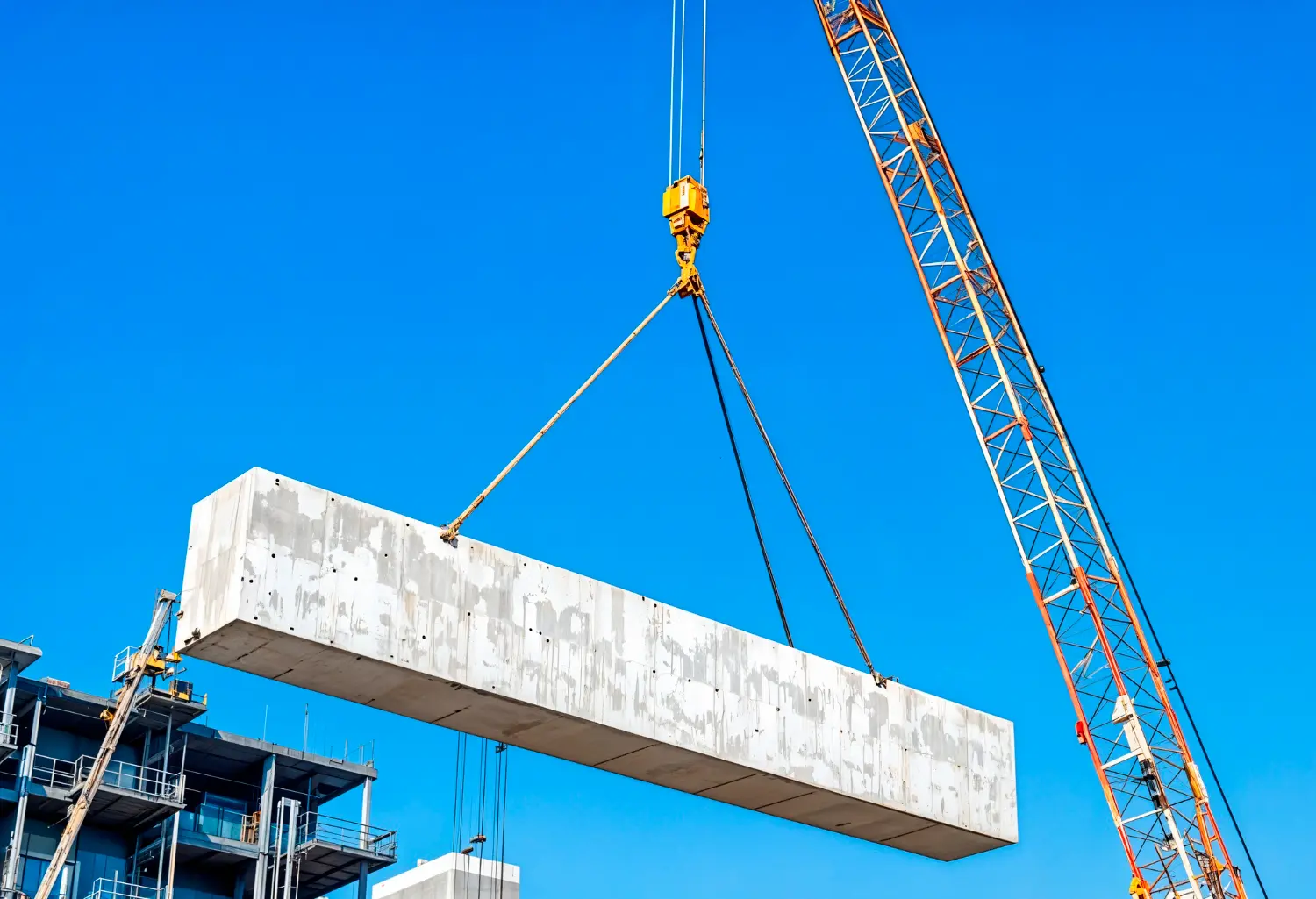
Precast Concrete for Factory Construction in India: Structural Components, Infrastructure and Building Solutions
India's industrial growth is driving the development of new factories, manufacturing facilities, production units, industrial estates and large-scale processing infrastructure. As businesses expand their production capabilities, the demand for construction methods that support efficient execution, dependable infrastructure and long-term operational requirements continues to grow.
Factory construction involves several interconnected elements. From foundations and structural systems to drainage, internal roads, utility infrastructure and supporting concrete components, every part of the facility contributes to its overall functionality.
Precast concrete has become an important construction solution for industrial development because it allows concrete components to be manufactured in advance and incorporated into projects through planned installation and execution.
For factory construction projects, precast concrete can be used across a wide range of applications, including foundations, drainage infrastructure, structural elements, retaining walls, slabs and customised components designed according to project requirements.
Understanding Precast Concrete in Factory Construction
Precast concrete refers to concrete components manufactured in a controlled production environment and transported to the construction site for installation or integration into the project.
Instead of casting every concrete element at the final construction location, selected components can be produced in advance according to approved drawings, dimensions and specifications.
This construction approach can be particularly useful for industrial projects where multiple concrete components are required across different areas of the facility.
Factory construction may involve:
- Industrial building foundations
- Equipment foundations and supporting structures
- Internal drainage infrastructure
- Underground utility systems
- Retaining structures
- Concrete slabs and platforms
- Access structures
- Road and site infrastructure
- Water management systems
- Customised precast components
The application of precast concrete depends on the factory's layout, structural design, operational requirements, soil conditions, loading considerations and overall construction methodology.
Where Precast Concrete Is Used in Factory Construction
1. Precast Foundations for Industrial Buildings and Equipment
Foundations form the base of factory infrastructure and are responsible for transferring structural loads to the ground.
Industrial facilities may require foundations for structural columns, machinery, equipment installations, storage systems, utility structures and other elements depending on the facility's design.
Precast foundation systems can be considered for applications where their dimensions, structural requirements, site conditions and installation methodology are compatible with the project.
Factory-built footing components can support organised manufacturing and installation planning, particularly in projects involving repetitive foundation requirements.
Precast foundations may be considered for:
- Industrial building columns
- Equipment support structures
- Utility installations
- Supporting infrastructure
- Repetitive foundation layouts
- Selected industrial structural applications
The foundation design must be developed according to the required loads, soil conditions, structural calculations and engineering specifications.
Explore precast footing with pedestal solutions for industrial and infrastructure construction applications.
2. Precast Drainage Systems for Manufacturing Facilities
Drainage is a fundamental part of factory infrastructure.
Industrial facilities often include large roof areas, internal roads, paved loading zones, parking areas, processing spaces and external site development. These areas require suitable drainage planning to manage surface water and direct runoff toward designated collection or discharge systems.
Depending on the facility, drainage infrastructure may include:
- Surface drainage channels
- U drains
- Covered drains
- Stormwater drainage
- Underground drainage lines
- Manhole chambers
- Junction chambers
- Culverts
- Collection and discharge structures
Precast drainage components can support the development of industrial drainage networks through planned manufacturing and installation.
Precast U Drains
U drains are commonly used for managing surface water along roads, industrial premises, facility boundaries, paved areas and other locations where a defined drainage channel is required.
Covered U drains can be considered in locations where the drainage channel needs a cover as part of the surrounding layout or operational requirements.
Explore precast U drains with covers for factory drainage, industrial premises and infrastructure applications.
Precast Hume Pipes
RCC Hume pipes can be used in underground drainage, stormwater management, culverts and other water conveyance applications depending on the design and installation conditions.
For industrial developments with extensive site infrastructure, Hume pipes may form part of the drainage network connecting different areas of the facility.
Learn more about precast RCC Hume pipes for drainage and infrastructure requirements.
3. Precast Box Culverts for Industrial Roads and Water Crossings
Factories often require internal roads for the movement of trucks, trailers, material handling vehicles, employees and other operational traffic.
During industrial site development, roads may cross natural drainage pathways, channels or other areas where water needs to pass beneath the roadway.
Box culverts provide a structural passage for water beneath roads and embankments and can be incorporated into infrastructure layouts according to hydraulic and structural design requirements.
Precast RCC box culverts may be used for:
- Industrial road crossings
- Drainage pathways
- Site development infrastructure
- Water passage beneath access roads
- Industrial estate road networks
- Infrastructure connecting different facility areas
Their use can be planned alongside road construction, drainage design and site development activities.
Explore precast RCC box culverts for industrial infrastructure and cross-drainage applications.
4. Precast Manhole Chambers for Industrial Utility Networks
Factories require several utility and infrastructure systems to support daily operations.
These may include drainage networks, underground service lines, water systems and other installations that require access for inspection or maintenance.
Manhole chambers provide access points within underground networks and are used at suitable locations based on the system layout and design.
Precast concrete manhole chambers can be incorporated into industrial utility infrastructure through planned manufacturing and installation.
Their application may be relevant for:
- Industrial drainage networks
- Underground service systems
- Utility connections
- Inspection points
- Drainage junctions
- Industrial site infrastructure
Manufactured concrete chambers can support project planning where standardised or project-specific components are required.
Explore precast manhole chambers for industrial, commercial and infrastructure applications.
5. Retaining Walls for Industrial Site Development
Factory developments may involve land with different elevations, site boundaries, road levels or areas requiring soil retention.
Retaining structures help manage differences in ground elevation and support the development of usable site areas according to the project's design.
Precast retaining walls can be considered for selected industrial applications where the design, structural requirements and installation conditions are suitable.
Common applications may include:
- Industrial site levelling
- Internal road development
- Infrastructure corridors
- Boundary elevation changes
- Site development
- Terraced industrial layouts
The design of retaining walls requires consideration of soil conditions, structural loads, drainage, foundation requirements and other engineering factors.
Explore precast retaining wall solutions for industrial, commercial and infrastructure developments.
6. Precast Solid Slabs for Industrial Applications
Concrete slabs are used across a variety of industrial construction applications.
Depending on their design, precast solid slabs may be used for covers, platforms, access structures, utility installations and other concrete applications where the component requirements are suitable.
Precast slabs can be manufactured according to specified dimensions and project requirements, allowing their production and installation to be coordinated with the construction schedule.
Their application depends on:
- Required dimensions
- Structural loading
- Support conditions
- Installation requirements
- Intended application
- Project specifications
Explore precast solid slabs for industrial and infrastructure component requirements.
7. Precast Staircases for Industrial Buildings
Factories and industrial facilities may require staircases across different parts of their infrastructure, including access to elevated platforms, service areas, administrative buildings, mezzanines and other structures.
Precast concrete staircases can be manufactured in advance according to project-specific dimensions and design requirements.
Their use can help coordinate staircase manufacturing with the broader structural construction and installation schedule.
For industrial projects where concrete staircases are required, precast solutions may be considered depending on the building design, structural layout and access requirements.
Explore precast concrete staircases for construction and infrastructure applications.
8. Custom Precast Components for Specialised Factory Requirements
Every factory has its own operational requirements.
A manufacturing facility for engineering products may have different infrastructure needs compared with a food processing facility, logistics centre, chemical manufacturing unit, automobile production plant or textile factory.
Some projects require concrete components designed for specific dimensions, configurations, installation conditions or applications.
Customised precast concrete manufacturing can support requirements involving:
- Specialised foundations
- Utility structures
- Equipment-supporting components
- Custom concrete chambers
- Structural elements
- Site infrastructure
- Project-specific concrete components
Custom precast solutions are developed according to the project drawings, technical specifications, intended application and manufacturing requirements.
For factories and industrial developments requiring specialised concrete components, customised precast manufacturing can be considered as part of the project's overall construction planning.
How Precast Concrete Supports Factory Construction
Factory development often involves multiple activities that need to be coordinated within a defined construction schedule.
Precast concrete can support industrial construction through a manufacturing-led approach that allows selected components to be produced before they are required at the site.
Planned manufacturing and site execution
Depending on project requirements, manufacturing of precast components may be scheduled alongside site preparation, excavation, infrastructure development and other construction activities.
This can help project teams coordinate different activities within the broader execution plan.
Component consistency
Manufacturing components according to defined drawings and specifications allows production processes to be organised around repeatable requirements.
For industrial projects involving multiple similar components, this can support consistency across manufactured elements.
Installation planning
Precast components require coordination regarding transportation, unloading, lifting, installation sequence and site readiness.
Planning these activities in advance helps integrate manufactured components into the construction schedule.
Reduced site-based casting requirements for selected components
When suitable concrete components are manufactured away from the project site, some site-based casting activities can be reduced.
This can change the way project teams organise labour, equipment, material handling and construction activities.
Coordination of multiple infrastructure requirements
Industrial facilities require several supporting infrastructure systems beyond the main building.
Precast concrete can be used across drainage, foundations, retaining structures, slabs, utility infrastructure and other applications, depending on the project.
This allows precast solutions to be considered as part of an integrated industrial infrastructure plan.
Precast Concrete and Traditional Construction in Factory Development
Factory construction can involve a combination of conventional construction methods and precast concrete.
The appropriate construction approach depends on the project's design, structural requirements, construction sequence, site conditions, logistics and overall execution strategy.
ConsiderationPrecast ConstructionConventional On-Site ConstructionComponent productionManufactured before installationConcrete elements cast at the siteExecution approachProduction and installation are plannedConstruction activities are organised around site executionSchedulingManufacturing can potentially run alongside site activitiesActivities may follow site-dependent sequencesRepetitive componentsManufacturing can be planned for repeated elementsRepetition is managed through on-site formwork and castingSite requirementsTransportation, unloading and installation planningCasting space, material storage and site execution planningQuality managementManufacturing processes can be organised within a production environmentQuality management is performed during on-site constructionProject suitabilityDepends on component design, logistics and installation conditionsDepends on site capability, design and construction requirements
For factory construction, a hybrid approach may also be suitable, where precast concrete is used for selected infrastructure and structural components while other parts of the facility are constructed using conventional methods.
The construction methodology should be evaluated according to the requirements of the complete project rather than a single component.
Planning Precast Concrete Requirements for a Factory Project
Precast concrete requirements should ideally be identified during the early planning stages of industrial construction.
The project team, engineers, contractors and precast manufacturer may need to coordinate the following:
Drawings and specifications
Component dimensions, structural requirements, design details, application and technical specifications should be clearly established.
Quantity estimation
The required quantity of components should be determined according to the project layout, drawings and infrastructure requirements.
Manufacturing schedule
Production timelines should be coordinated with the overall construction schedule and installation requirements.
Transportation and logistics
The project should account for component dimensions, transportation routes, delivery planning, unloading space and access conditions.
Site readiness
The site should be prepared to receive and install precast components according to the planned sequence.
Installation requirements
Lifting arrangements, equipment, manpower, installation methodology and coordination with other construction activities should be established as required.
Early planning allows precast manufacturing and site execution to become part of the same project strategy.
Choosing the Right Precast Concrete Manufacturer for Factory Construction
Selecting a suitable precast manufacturer is an important part of industrial project procurement.
Factory construction may involve several different types of concrete components, each with its own specifications, dimensions, manufacturing requirements and installation considerations.
A manufacturer should be evaluated based on its ability to understand project requirements and coordinate the production and supply of components accordingly.
Important considerations include:
Manufacturing capabilities
Evaluate the manufacturer's product range and ability to manufacture the components required for the project.
Project-specific requirements
Industrial projects may require customised concrete components. The manufacturer's ability to work according to drawings, specifications and project requirements is an important consideration.
Production planning
Manufacturing timelines should be coordinated with the project's procurement and installation schedules.
Transportation coordination
Precast components require appropriate transport and delivery planning according to their dimensions, weight and site conditions.
Project experience
Experience in infrastructure, industrial, renewable energy and other construction projects can help demonstrate familiarity with different applications and execution requirements.
Project coordination
Clear communication between the manufacturer, contractor, engineering team and project management team is important throughout manufacturing, supply and installation.
For industrial developments requiring multiple precast components, choosing a manufacturer with a broad product range and project coordination capabilities can support procurement and execution planning.
Sachi Precast: Industrial and Infrastructure Concrete Solutions
Sachi Precast is a precast concrete manufacturer based in Gujarat, India, supplying precast solutions for infrastructure, industrial, renewable energy and construction projects.
Our range includes RCC Hume pipes, box culverts, U drains, manhole chambers, retaining walls, footings with pedestals, solid slabs, junction chambers, slope drains, precast tanks and customised concrete components.
With manufacturing facilities in Gujarat and experience across infrastructure and renewable energy projects, Sachi Precast supports construction requirements involving precast manufacturing, supply, project coordination and installation.
Our project portfolio includes work associated with developments such as the Adani Green Renewable Park, NTPC Solar Park and the Mumbai–Ahmedabad Bullet Train project.
For factory construction, industrial infrastructure and site development, precast concrete can be incorporated across different applications according to project design and requirements.
Explore our complete range of precast concrete products to identify solutions for your upcoming industrial development.
Conclusion
Factory construction requires careful coordination between the building structure, foundations, drainage systems, internal roads, utility infrastructure and supporting concrete components.
Precast concrete offers a manufacturing-led construction approach that can be incorporated into different areas of industrial development, including foundations, drainage, retaining structures, slabs, utility infrastructure and specialised concrete components.
By considering precast concrete during the planning and design stages, factory developers, contractors and project teams can coordinate component requirements, production, transportation and installation within the overall construction schedule.
As India's industrial infrastructure continues to expand, the role of efficient construction planning and dependable precast concrete solutions will remain important in developing facilities designed for long-term operational requirements.
Planning a factory, manufacturing facility or industrial development? Connect with Sachi Precast to discuss precast concrete solutions for your upcoming project.
Frequently Asked Questions
Where is precast concrete used in factory construction?
Precast concrete can be used for industrial foundations, drainage systems, box culverts, manhole chambers, retaining walls, slabs, staircases, utility structures and customised components, depending on the project design.
What precast products are required for industrial factory development?
Depending on the facility, industrial construction may require precast footings, U drains, Hume pipes, box culverts, manhole chambers, retaining walls, solid slabs, staircases and specialised concrete components.
Can precast concrete be used for factory foundations?
Yes, precast foundation systems can be considered for certain factory construction applications when the design, soil conditions, structural requirements and installation conditions are suitable.
Why is precast concrete suitable for industrial infrastructure?
Precast concrete allows selected components to be manufactured in advance, supports planned production and installation, and can help coordinate concrete component requirements across different areas of an industrial project.
Can precast concrete be customised for factory projects?
Yes. Precast components can be manufactured according to project-specific drawings, dimensions, specifications and requirements, subject to manufacturing feasibility and engineering design.
Who supplies precast concrete components for factory construction in Gujarat?
Sachi Precast manufactures precast concrete products in Gujarat for industrial, infrastructure, renewable energy and construction applications. The product range includes drainage systems, foundations, retaining walls, slabs, box culverts and customised precast components.
Build Smarter With Sachi Precast
From ready-made precast components to fully customized solutions, we handle everything from manufacturing to on-site erection — delivering faster, stronger, and more efficient construction outcomes.