
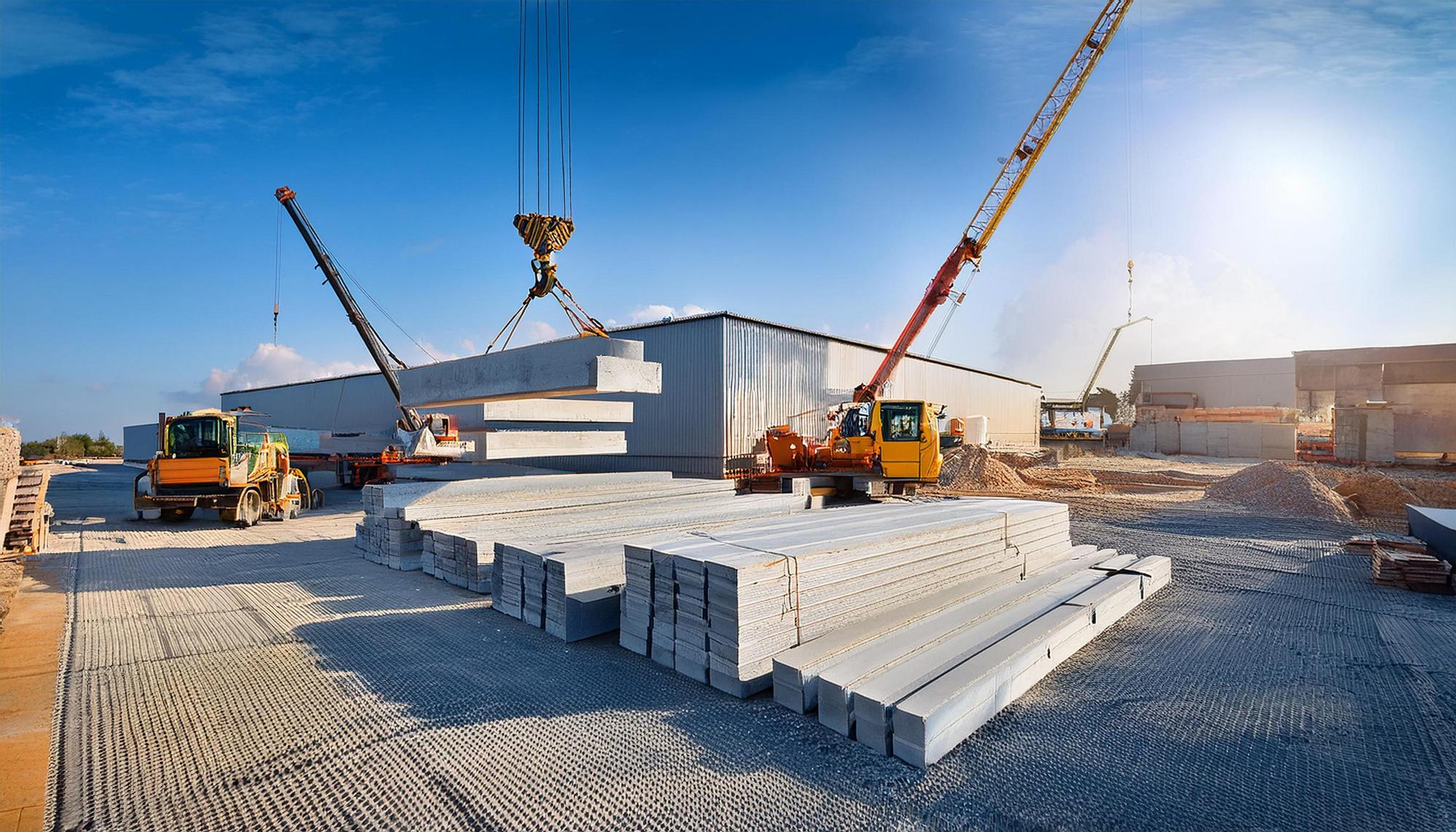
Why More Businesses Are Reconsidering How They Build New Facilities
Not long ago, most businesses approached construction the same way.
Find land.
Finalize designs.
Start construction.
Wait for completion.
Today, that approach is changing.
Across Gujarat, businesses are increasingly re-evaluating how they build new facilities—not because construction itself has changed, but because business expectations have changed.
Companies today operate in a far more competitive environment.
Expansion plans move faster.
Operational timelines are tighter.
Delays can affect revenue.
Future growth often needs to be considered from day one.
As a result, developers, manufacturers, industrial operators, and business owners are asking a different question:
Instead of asking how to build a facility, they are asking how to build one that performs better, becomes operational sooner, and remains valuable for years to come.
Business Growth Is Moving Faster Than Traditional Timelines
Many industries across Gujarat are experiencing rapid growth.
Manufacturing.
Logistics.
Warehousing.
Renewable energy.
Industrial development.
Commercial infrastructure.
As businesses expand, waiting extended periods for facilities to become operational can create challenges.
Every month spent waiting may impact:
- Operational capacity
- Expansion plans
- Revenue generation
- Resource allocation
- Market opportunities
This is one reason project timelines have become a much larger consideration during facility planning.
As discussed in Why Some Construction Projects Stay on Schedule While Others Don't, planning and execution often influence project outcomes just as much as construction itself.
Businesses Are Looking Beyond the Building Itself
A facility is more than a structure.
Its success depends on everything supporting it.
Questions business owners increasingly ask include:
- Will the site support future expansion?
- How will water be managed?
- Is infrastructure planned properly?
- Will maintenance remain manageable?
- Can the facility adapt to changing operational requirements?
These considerations often become more important over time.
As explored in Why We Focus on Long-Term Performance Instead of Short-Term Solutions, the true value of a project is often measured years after construction is complete.
Speed Matters, But Predictability Matters More
Every business appreciates faster project completion.
However, predictability is often even more valuable.
A predictable timeline allows companies to:
- Plan operations
- Schedule staffing
- Coordinate suppliers
- Manage investments
- Reduce uncertainty
This is one reason many organizations are placing greater emphasis on planning, infrastructure readiness, and project coordination.
As discussed in Why Predictability Is Becoming the Most Valuable Asset in Construction, predictability is increasingly becoming a competitive advantage.
Infrastructure Planning Is Receiving More Attention
One of the biggest shifts we have observed is the growing focus on infrastructure.
Businesses are increasingly recognizing that operational success depends on more than the facility itself.
Infrastructure planning now includes:
- Drainage systems
- Water management
- Accessibility
- Utility coordination
- Future expansion planning
Products such as RCC Pipes, Box Culverts, and U-Shaped Channel Sections continue supporting infrastructure requirements across industrial and commercial developments throughout Gujarat.
As highlighted in What Developers Often Realize Too Late During Construction, infrastructure decisions often influence project performance long after construction ends.
Future Growth Is Being Planned Earlier
Businesses today are thinking differently about expansion.
Instead of planning solely for current requirements, many organizations evaluate how facilities may need to evolve in the future.
This includes considerations such as:
- Increased production capacity
- Additional operational space
- New technologies
- Future workforce requirements
- Logistics expansion
Facilities designed with flexibility in mind are often better positioned to adapt as business needs change.
This long-term perspective continues influencing how developers evaluate construction and infrastructure investments.
Renewable Energy Is Influencing Development Decisions
Renewable energy projects have helped reshape how businesses think about infrastructure.
Large developments such as the Adani Green Renewable Park Project, NTPC Solar Park Project, and Tata Power Mundra Project demonstrate the importance of planning for long-term operational performance.
These projects reinforce a valuable lesson:
Infrastructure should not be designed only for today's requirements.
It should be prepared for tomorrow's demands as well.
As explored in Why Infrastructure Matters More Than Solar Panels in Long-Term Renewable Energy Success, long-term project performance often depends on the systems supporting operations behind the scenes.
Commercial and Industrial Facilities Are Becoming More Strategic Investments
For many businesses, facilities are no longer viewed solely as physical assets.
They are strategic investments.
A facility influences:
- Productivity
- Operational efficiency
- Maintenance costs
- Workforce effectiveness
- Long-term scalability
This shift is one reason businesses are paying closer attention to construction methods, infrastructure planning, and lifecycle performance when evaluating new developments.
As discussed in Can You Build a Commercial Building Using Precast Construction?, modern commercial projects increasingly prioritize efficiency, flexibility, and future readiness.
How Sachi Precast Supports Future-Ready Facilities
At Sachi Precast, we support infrastructure, industrial, renewable energy, transportation, and commercial projects through solutions designed for long-term reliability and performance.
Our product portfolio includes:
The lessons learned from supporting infrastructure and development projects across Gujarat continue shaping how we approach every project.
For a broader understanding of how precast solutions support residential, commercial, industrial, infrastructure, and renewable energy developments, explore our complete guide to Precast Construction in Gujarat.
Frequently Asked Questions
Why are businesses rethinking how they build new facilities?
Businesses are increasingly focusing on operational efficiency, predictability, future growth, lifecycle value, and long-term performance rather than simply completing construction.
What factors influence modern facility planning?
Key factors include infrastructure readiness, accessibility, water management, operational efficiency, future expansion requirements, and long-term maintenance considerations.
Why is predictability important in construction?
Predictability helps businesses coordinate operations, manage investments, reduce uncertainty, and improve project planning.
How does infrastructure affect commercial and industrial facilities?
Infrastructure supports drainage, accessibility, utility systems, water management, and operational performance, making it a critical part of facility success.
Why are businesses focusing on long-term performance?
Long-term performance influences operational efficiency, maintenance costs, scalability, reliability, and overall return on investment.
How does Sachi Precast support commercial and industrial developments?
Sachi Precast supports projects through durable precast solutions designed for infrastructure reliability, operational efficiency, and long-term performance.
Final Thoughts
The conversation around construction is changing.
Businesses are no longer focused only on completing facilities.
They are focused on creating facilities that can support growth, improve efficiency, adapt to changing requirements, and continue delivering value over time.
That shift is why more businesses are reconsidering how they build new facilities—and why infrastructure, planning, predictability, and long-term performance are becoming more important than ever before.
FAQs
Yes. Modern precast construction supports a wide variety of architectural styles, layouts, and design preferences.
Yes. Precast construction is increasingly used for villas, luxury residences, and premium residential developments.
No. Modern precast solutions are widely used for homes, offices, farmhouses, commercial buildings, and infrastructure projects.
Yes. Precast construction is well-suited to Gujarat's hot summers and monsoon conditions when properly designed.
Build Smarter With Sachi Precast
From ready-made precast components to fully customized solutions, we handle everything from manufacturing to on-site erection — delivering faster, stronger, and more efficient construction outcomes.