
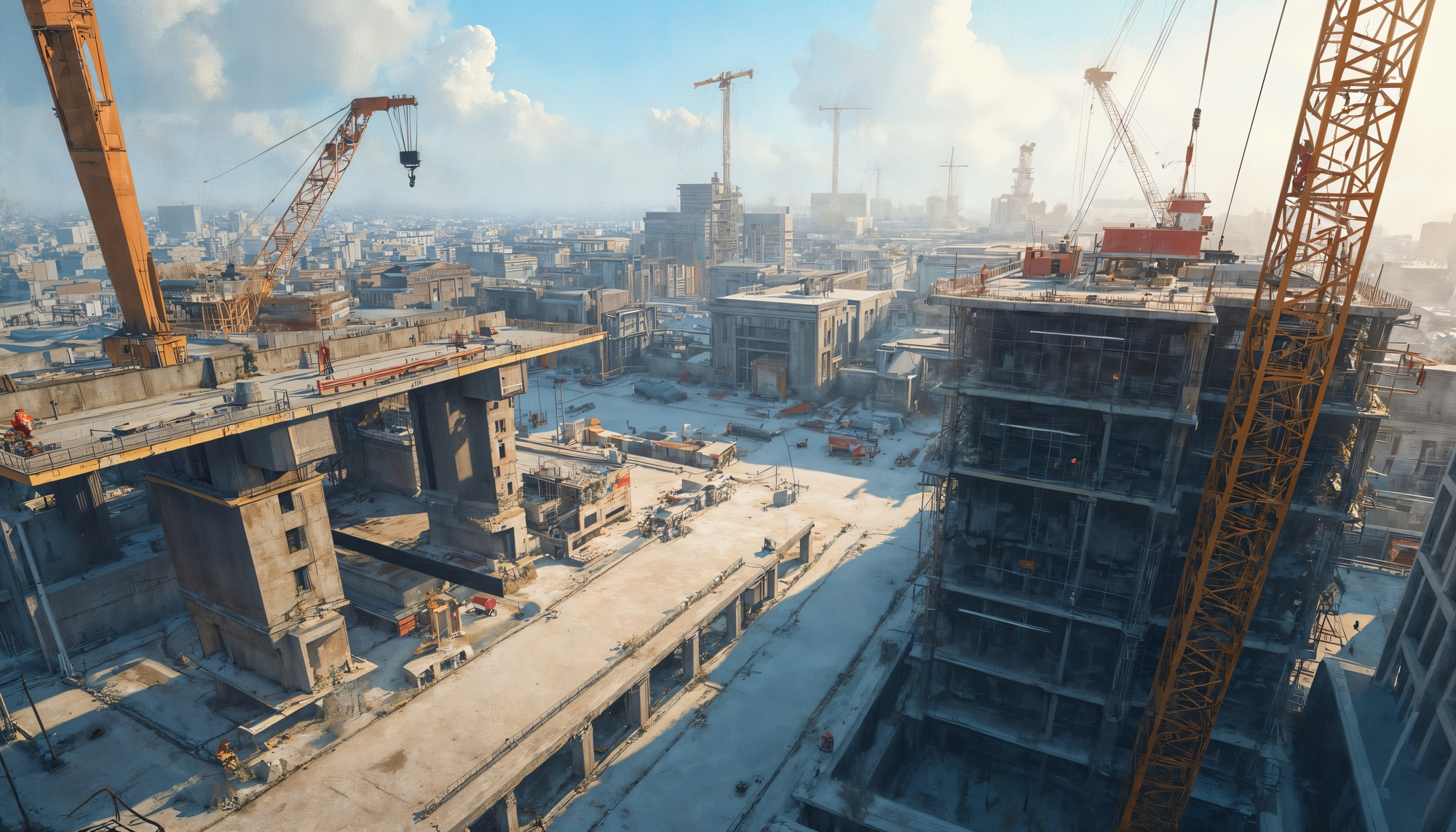
What Developers Often Realize Too Late During Construction
Every successful construction project begins long before the first excavation, concrete pour, or structural installation.
Yet across residential, industrial, infrastructure, and renewable energy projects, developers often encounter the same challenge:
Some of the most important construction decisions only become obvious after construction has already begun.
By that stage, changes are typically more expensive, more disruptive, and significantly harder to implement.
Whether the project is a residential development, industrial facility, renewable energy park, or public infrastructure initiative, long-term success often depends on decisions made during the planning phase rather than during construction itself.
At Sachi Precast, our experience supporting projects across Gujarat has shown that many construction challenges can be traced back to infrastructure planning, site preparation, and long-term thinking.
Thinking About the Structure but Forgetting the Infrastructure
When planning a project, most stakeholders naturally focus on visible elements:
- Buildings
- Roads
- Utilities
- Structures
- Equipment
What is often overlooked is the infrastructure supporting those assets.
Questions such as:
- How will water move across the site?
- What happens during heavy rainfall?
- How will maintenance teams access critical areas?
- Is the drainage infrastructure sufficient?
- Can the site accommodate future expansion?
are sometimes addressed too late in the process.
As discussed in What We've Learned From Supporting Construction Projects Across Gujarat, successful projects are often distinguished not by how quickly they begin but by how thoroughly they are planned.
Underestimating Drainage Requirements
One of the most common issues encountered across construction projects is inadequate drainage planning.
Water may seem like a secondary concern during the design phase, but it quickly becomes a priority once construction begins.
Poor drainage planning can contribute to:
- Water accumulation
- Soil erosion
- Site access challenges
- Maintenance difficulties
- Increased operational costs
This is one reason why infrastructure solutions such as RCC Pipes, Box Culverts, and U-Shaped Channel Sections remain essential components of long-term infrastructure planning.
The most successful projects treat drainage as a foundational requirement rather than an afterthought.
Focusing on Construction Costs Instead of Lifecycle Costs
Another common realization occurs when project owners begin evaluating maintenance requirements after completion.
Initial construction costs are important, but they represent only part of a project's long-term investment.
Developers increasingly evaluate projects based on:
- Durability
- Maintenance requirements
- Lifecycle performance
- Operational efficiency
- Long-term value
As explored in With Construction Costs Rising, Is Precast Becoming the Smarter Choice?, the lowest upfront cost is not always the most economical decision over the life of a project.
Not Planning for Future Growth
Many facilities eventually require:
- Expansion
- Additional infrastructure
- Increased operational capacity
- New utility systems
Projects designed only for immediate requirements can face limitations later.
This applies equally to industrial facilities, renewable energy developments, commercial sites, and residential communities.
Forward-thinking developers often evaluate how infrastructure decisions made today may affect future flexibility.
The same principle is discussed in Why Predictability Is Becoming the Most Valuable Asset in Construction, where long-term planning is increasingly becoming a competitive advantage.
Ignoring Site Accessibility
Construction teams, maintenance personnel, suppliers, and operators all depend on site accessibility.
Yet access planning is often underestimated.
Questions such as:
- Can equipment reach critical areas?
- Can maintenance teams operate efficiently?
- Is the site accessible during adverse weather conditions?
can significantly influence long-term project performance.
Large-scale developments such as the Mumbai–Ahmedabad Bullet Train Project highlight the importance of infrastructure planning that supports operational requirements for decades.
Treating Infrastructure as a Secondary Investment
Many developers initially view infrastructure as a supporting expense rather than a strategic investment.
However, experience consistently demonstrates the opposite.
Infrastructure influences:
- Project reliability
- Site performance
- Operational efficiency
- Maintenance requirements
- Long-term asset value
This is particularly evident in renewable energy developments such as the Adani Green Renewable Park Project and the NTPC Solar Park Project, where supporting infrastructure plays a critical role in long-term operational success.
Waiting Too Long to Consider Water Management
Water management is one of the most overlooked yet important aspects of construction planning.
Whether the project involves:
- Industrial facilities
- Solar parks
- Commercial developments
- Residential communities
effective water management remains essential.
Infrastructure solutions must support both current and future site requirements.
As explored in Why Infrastructure Matters More Than Solar Panels in Long-Term Renewable Energy Success, water management can have a direct impact on long-term project reliability.
The Projects That Perform Best Are Usually Planned Best
One lesson consistently emerges across successful developments.
Projects that perform well over decades are rarely the result of last-minute decisions.
They are typically the result of:
- Thorough planning
- Infrastructure investment
- Long-term thinking
- Quality execution
- Future readiness
Whether supporting transportation infrastructure, industrial facilities, renewable energy developments, or residential communities, the strongest projects are often those where infrastructure planning begins at the earliest stages.
How Sachi Precast Supports Better Project Planning
At Sachi Precast, we support developers, contractors, infrastructure planners, and project owners through solutions designed to support long-term performance.
Our product range includes:
Through our experience across infrastructure, renewable energy, industrial, and transportation projects, we continue to see the value of planning infrastructure before challenges emerge rather than after they occur.
For a broader understanding of how precast solutions support modern construction, explore our complete guide to Precast Construction in Gujarat
Frequently Asked Questions
What is the biggest mistake developers make during construction?
One of the most common mistakes is treating infrastructure planning as a secondary priority rather than addressing drainage, utility systems, and long-term operational requirements from the beginning.
Why is drainage planning important in construction?
Drainage helps manage water movement, reduce erosion, improve accessibility, and protect infrastructure from long-term damage.
Why should developers think about lifecycle costs?
Lifecycle costs often exceed initial construction costs over time. Evaluating maintenance, durability, and operational efficiency can help improve long-term value.
How does infrastructure affect project performance?
Infrastructure influences reliability, accessibility, maintenance requirements, operational efficiency, and long-term asset performance.
Why is future planning important in construction?
Projects often evolve over time. Planning for future growth, expansion, and changing requirements can help avoid costly modifications later.
Final Thoughts
Construction challenges are not always caused by poor execution.
More often, they result from planning decisions that overlooked long-term requirements.
The projects that perform best over time are usually those that prioritize infrastructure, water management, accessibility, and future readiness from the very beginning.
Because what developers often realize too late during construction is that the most important decisions were never about the building itself—they were about everything supporting it.
Build Smarter With Sachi Precast
From ready-made precast components to fully customized solutions, we handle everything from manufacturing to on-site erection — delivering faster, stronger, and more efficient construction outcomes.