
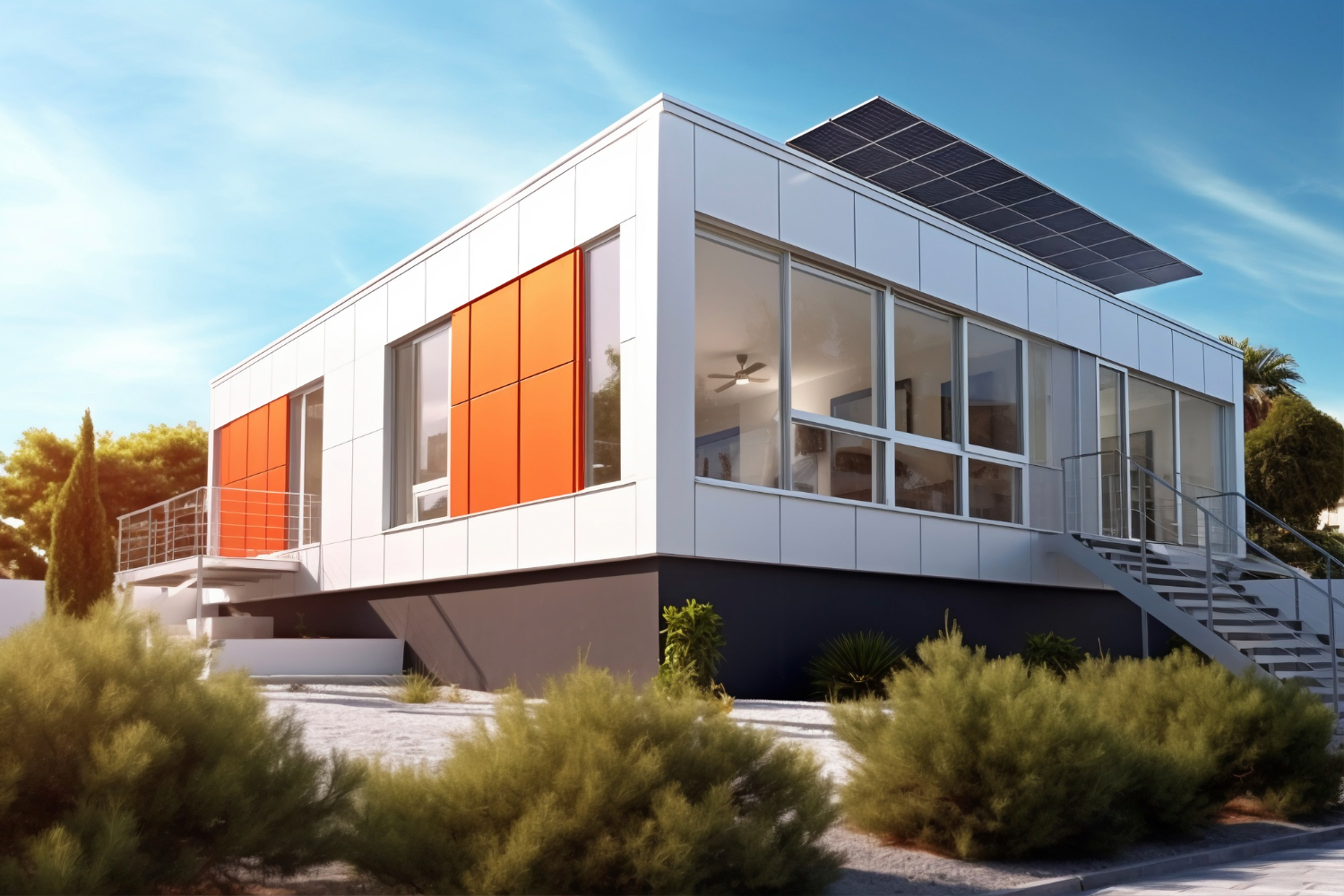
Can a Precast Home Stay Cooler During Ahmedabad's Summer? Heat, Comfort & Energy Savings Explained
If you've lived through an Ahmedabad summer, you know how challenging the heat can be.Temperatures regularly cross 40°C, walls absorb heat throughout the day, and air conditioners often run for hours just to keep indoor spaces comfortable. Whether you're planning a new home, villa, farmhouse, office, or commercial building, one question becomes increasingly important:Will the building stay comfortable during Gujarat's extreme summer months?As precast construction gains popularity across India, many homeowners and developers are asking whether precast buildings perform better in hot climates than traditional construction methods.At Sachi Precast, this is one of the most common questions we receive from property owners exploring modern construction methods. The answer is not simply yes or no—it depends on how the building is designed, how precast elements are used, and how thermal performance is managed.However, when designed correctly, precast construction offers several advantages that make it particularly suitable for Ahmedabad's climate.
Why Ahmedabad's Climate Creates Unique Construction Challenges
Before understanding the benefits of precast construction, it's important to understand the environment buildings must perform in.
Ahmedabad experiences:
- Extended summer seasons
- Temperatures exceeding 40°C
- Intense afternoon sun exposure
- High heat retention in urban areas
- Sudden seasonal transitions during monsoon
These conditions place significant stress on buildings.
Homeowners often experience:
- overheating rooms
- increased cooling costs
- thermal discomfort
- wall expansion and contraction
- long-term maintenance issues
Choosing the right construction system can significantly influence how a building responds to these conditions.
What Is a Precast Home?
A precast home is built using structural components that are manufactured in a controlled factory environment before being transported and assembled on-site.
These components may include:
- wall panels
- columns
- beams
- slabs
- staircases
- structural elements
Unlike conventional construction, which relies heavily on on-site casting and manual execution, precast construction focuses on precision manufacturing and faster assembly.
This approach provides greater consistency, quality control, and predictable performance.
How Heat Enters a Building
Many people assume that indoor heat is caused only by outside temperatures.
In reality, heat enters buildings through:
Roof Surfaces
The roof receives the highest amount of direct solar radiation.
External Walls
Walls absorb sunlight throughout the day and gradually transfer heat indoors.
Windows and Openings
Glass surfaces can significantly increase indoor temperatures if not properly managed.
Air Leakage
Poorly sealed construction allows hot external air to enter continuously.
Understanding these factors helps explain why some buildings feel cooler than others despite being located in the same area.
Why Precast Construction Performs Well in Hot Climates
One of the biggest advantages of precast concrete is its thermal mass.
Thermal mass refers to a material's ability to absorb, store, and gradually release heat.
Instead of allowing heat to pass quickly into living spaces, precast concrete slows the transfer process.
This creates a more stable indoor environment throughout the day.
Benefits include:
- reduced temperature fluctuations
- slower heat penetration
- improved indoor comfort
- reduced strain on cooling systems
For homeowners in Ahmedabad, this can make a noticeable difference during peak summer months.
Does a Precast Home Actually Feel Cooler?
This is the question most homeowners care about.
The answer is that a well-designed precast home can feel more comfortable because it experiences slower heat transfer compared to many conventional construction approaches.
During the hottest hours of the day:
- external temperatures rise rapidly
- walls receive continuous sunlight
- roofs absorb significant heat
Because precast concrete has substantial thermal mass, heat moves more gradually through the structure.
As a result:
- rooms remain more stable
- cooling systems work more efficiently
- temperature spikes are reduced
This doesn't mean a home will remain cold without any cooling system. Rather, it means the building performs more efficiently against external heat.
Can Precast Construction Help Reduce Air Conditioning Usage?
Energy efficiency is becoming increasingly important for homeowners.
While actual electricity savings vary depending on building design, many property owners choose precast construction because it helps create a more thermally stable environment.
Factors that influence cooling performance include:
- wall thickness
- insulation systems
- window placement
- ventilation design
- roof treatment
When combined with smart architectural planning, precast construction can contribute to reduced cooling demand.
This is especially valuable in Ahmedabad, where air conditioners often operate for extended periods throughout summer.
Precast Homes During Monsoon Season
A building in Gujarat must perform well not only during summer but also during monsoon.
Heavy rainfall can expose weaknesses in poorly executed construction.
Because precast elements are manufactured under controlled conditions, they offer:
- consistent quality
- accurate dimensions
- reduced site variability
- reliable structural performance
Many homeowners appreciate the predictable quality that factory-controlled production provides.
Proper drainage planning remains equally important.
Infrastructure systems such as:
RCC Pipes
https://sachiprecast.com/products/rcc-pipes
and
U-Shaped Channel Sections
https://sachiprecast.com/products/u-shaped-channel-sections
help manage rainwater efficiently around residential and commercial developments.
Can Villas, Farmhouses and Weekend Homes Be Built Using Precast?
Absolutely.
Modern precast construction is no longer limited to industrial projects.
Today it is widely used for:
- luxury villas
- weekend homes
- farmhouses
- office buildings
- commercial developments
- institutional buildings
Architectural flexibility has improved significantly, allowing homeowners to achieve modern designs without compromising structural performance.
Why More Property Owners in Gujarat Are Exploring Precast Construction
Several trends are driving interest in precast construction:
Faster Project Completion
People want homes completed sooner.
Better Quality Control
Factory manufacturing improves consistency.
Weather Performance
Buildings must withstand both summer and monsoon conditions.
Reduced Construction Uncertainty
Predictable execution reduces project risk.
These factors continue to increase demand for precast solutions across Gujarat.
Is a Precast Home Right for You?
If your priorities include:
- faster construction
- long-term durability
- improved thermal performance
- reduced weather-related delays
- consistent construction quality
then precast construction is worth serious consideration.
The ideal solution depends on your project goals, site conditions, and architectural requirements.
At Sachi Precast, we help property owners explore construction systems designed for Gujarat's climate and modern building needs.
Learn more here:
Conclusion
Ahmedabad's climate demands buildings that can withstand extreme heat, seasonal weather changes, and long-term environmental exposure.
Precast construction offers several advantages that align well with these requirements, including thermal stability, structural consistency, faster execution, and improved predictability.
For homeowners, villa developers, office owners, and commercial property investors, precast construction presents a modern approach that is increasingly relevant to Gujarat's evolving construction landscape.
FAQs
Precast concrete's thermal mass helps slow heat transfer, creating a more stable indoor environment during hot weather.
Yes. Precast construction performs well in both hot summers and monsoon conditions when designed properly.
A thermally efficient building design may help reduce cooling demand, though actual savings depend on several factors.
Yes. Modern precast systems support a wide range of architectural styles, including villas, farmhouses, and luxury residences.
Build Smarter With Sachi Precast
From ready-made precast components to fully customized solutions, we handle everything from manufacturing to on-site erection — delivering faster, stronger, and more efficient construction outcomes.